Norwalk, CT · Garage Door Service
Opener Installation for Ridgefield's Early-1970s Garage Doors
Norwalk Garage Door Pros installs openers in Ridgefield, CT, where most houses date to the early 1970s - newer stock than Norwalk's, with different bracket and header setups.
- Repairs & new doors
- Springs & openers
- Serving 8 nearby communities
The Cost of This Job
Ridgefield sits about 16 miles out from our shop in Norwalk, and that distance is baked into any quote before we talk about the opener itself. The bigger cost driver, though, is the house. Norwalk's garage stock runs older on average, but Ridgefield's median build year is 1973 - late enough that most garages here were framed for a standard 7-foot header and factory-spec jamb brackets, not the shimmed, undersized openings you find on pre-1960 construction elsewhere in the area. That means less carpentry, less bracket fabrication, and a job that's usually straight opener-and-rail labor rather than a header rebuild. We quote once we've seen the door and the existing bracket, not before, because a 1973 opening can still have had its header swapped at some point by a previous owner.
With median household income in the service area at $168,810, we see a fair number of requests for quieter belt-drive units over chain drives, and for openers with battery backup given how often storms knock out power on this side of the state. Those add to the base install cost. We'll price the unit and the labor separately so you can see where the money goes.
How It Shows Up
The call usually starts with the opener itself, not the door: a motor that hums but doesn't lift, a remote that's stopped syncing, or a unit that's started reversing on its own partway up. On a 1973-era garage, the bracket and rail are original-spec enough that a straight swap to a new logic board or a full opener rarely needs new carpentry. What you're more likely to see is wear in the chain or belt from four or five decades of openers mounted on the same ceiling joist, plus wiring that's been patched by whoever installed the second or third opener on that bracket over the years. Some owners notice the opener working fine but the wall control failing first - that's often the tell that the whole unit is near the end of its service life rather than one bad part.
Why It Happens Here
Ridgefield's housing stock clusters tighter around the early 1970s than the broader Norwalk service area, where construction spans 1955 to 1984 with a median closer to 1968. That five-year gap matters for openers specifically: garages built in this window were more likely to get a chain-drive opener installed at construction or shortly after, rather than retrofitted decades later onto an older door. So the opener you're replacing in Ridgefield is more often the house's original or its first replacement - meaning the mounting hardware, the rail length, and the header clearance are usually a known, consistent quantity rather than a patchwork from multiple past retrofits. That consistency is actually good news for install time. It also means a fair number of these openers are now 20 to 30 years old and failing on schedule, all around the same age, rather than staggered.
What the Repair Takes
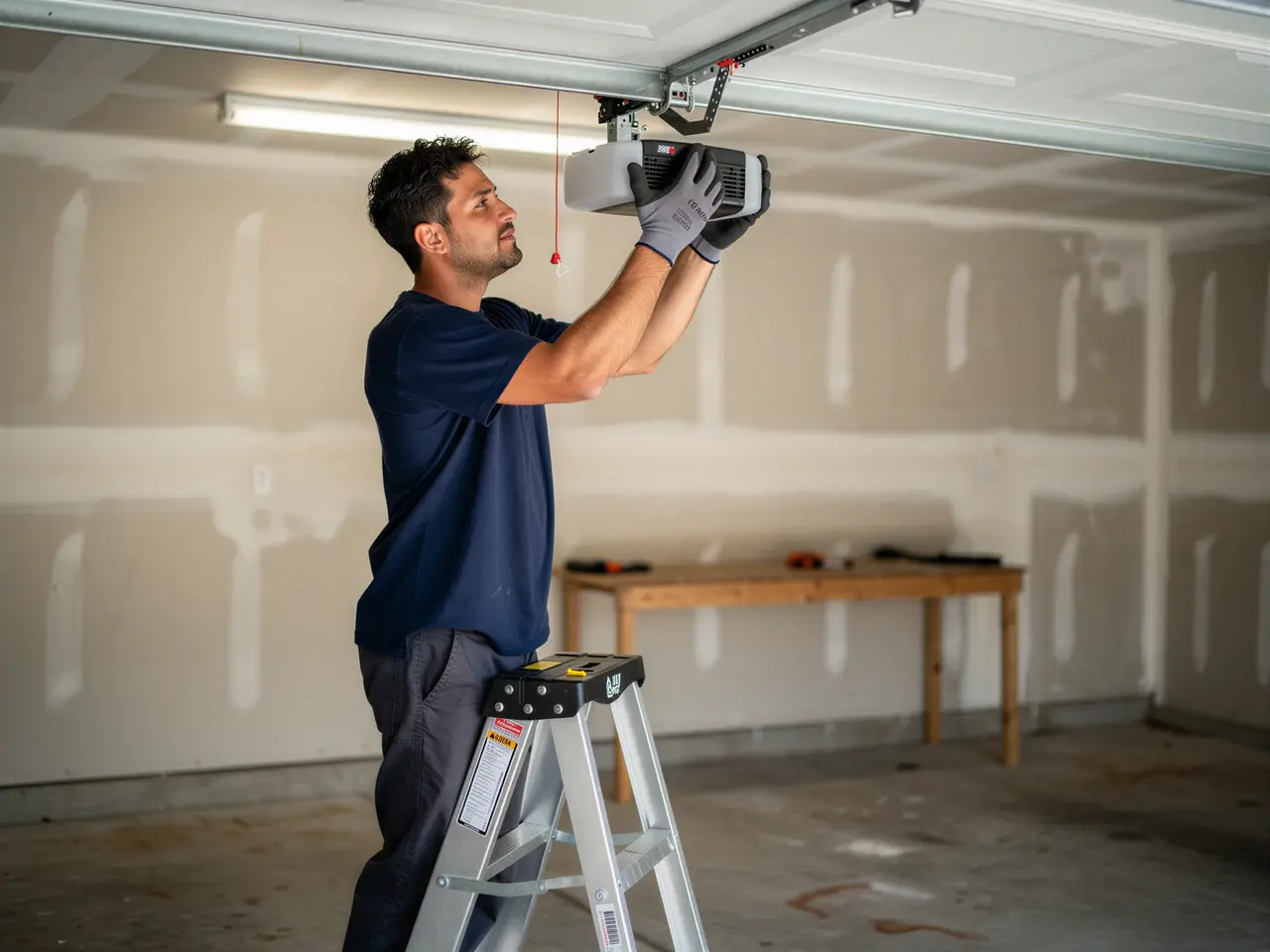
A straight opener swap on a header built to 1973 spec is usually a half-day job: disconnect the old unit, confirm the rail length and bracket condition, mount the new motor head, run the rail, wire the wall control and safety sensors, and program the remotes. Where it runs longer is the safety sensor alignment - on older installs the sensors were sometimes mounted lower or at mismatched heights, and code now expects them level and at a consistent height off the floor, so we re-set those as part of the job rather than leave mismatched brackets in place. Cold-climate wiring is another line item: in this part of Connecticut, winter means condensation and ice on exposed terminals in an unheated garage, so we use weather-rated connectors rather than the bare splices sometimes found on older installs.
Can You Do This Yourself
Mounting a new opener head isn't beyond a handy homeowner - the kits come with templates and most garages from this era have a straightforward header to work with. Where people get hurt, or get it wrong in a way that costs more later, is the spring and cable side of the door itself, and the electrical tie-in. If your garage runs on a torsion spring under tension, that's not a DIY step regardless of how simple the opener install looks. We'll say plainly: if the existing opener has failed because the door itself is out of balance, replacing the opener alone won't fix the real problem, and you'll be back to a stuck door within weeks.
What Can Go Wrong
The most common surprise on a 1973-vintage install is a header that looks standard but has been altered - a previous owner adding insulation, a dropped ceiling, or a second opener mounted on a different joist than the original. We check for that before we quote a flat rate. Another is wiring: homes in this build era often ran a single circuit to the garage that's now shared with lighting or a freezer, and an opener's draw on startup can trip an undersized breaker. We're not electricians and don't run new circuits - if that's what's needed, we'll tell you straight and point you to someone who does that work, rather than force the opener onto wiring that isn't built for it.
Frequently asked questions
Will my garage header need rebuilding for a new opener?
Usually not. Ridgefield's median build year of 1973 means most garages here already have a standard 7-foot header and factory-spec brackets, so a straight opener swap typically doesn't need carpentry. We confirm this when we see the door, since some openings have been altered since original construction.
Do you install the same day you quote in Ridgefield?
We travel from Norwalk, about 16 miles away, so we schedule the install rather than do it on the spot. We'll confirm bracket and header condition on site before locking the quote, then book the labor for a return visit or the same day if the schedule allows.
Why did my opener and my neighbor's fail around the same time?
A lot of Ridgefield's garages were built in a tight window around 1973, often with the opener installed at construction rather than retrofitted later. That means openers across a block can be close in age and fail on a similar schedule rather than staggered over decades.
Can you just replace the opener if the door doesn't open right?
Sometimes, but not always. If the door is out of balance - a worn spring or bent track - a new opener motor will strain against the same problem and fail again. We'll flag that before installing rather than sell you an opener that won't fix the actual issue.
More garage door services in Ridgefield
Book garage door service in Norwalk
Call now or request a quote - tell us what the door is doing and where you are.