Norwalk, CT · Garage Door Service
Garage Door Opener Installation for Norwalk Homes
Opener installation and replacement for Norwalk's 1960s-70s housing stock - matched to cold-climate loads and older track and header setups common across the area.
- Repairs & new doors
- Springs & openers
- Serving 8 nearby communities
What the Repair Takes
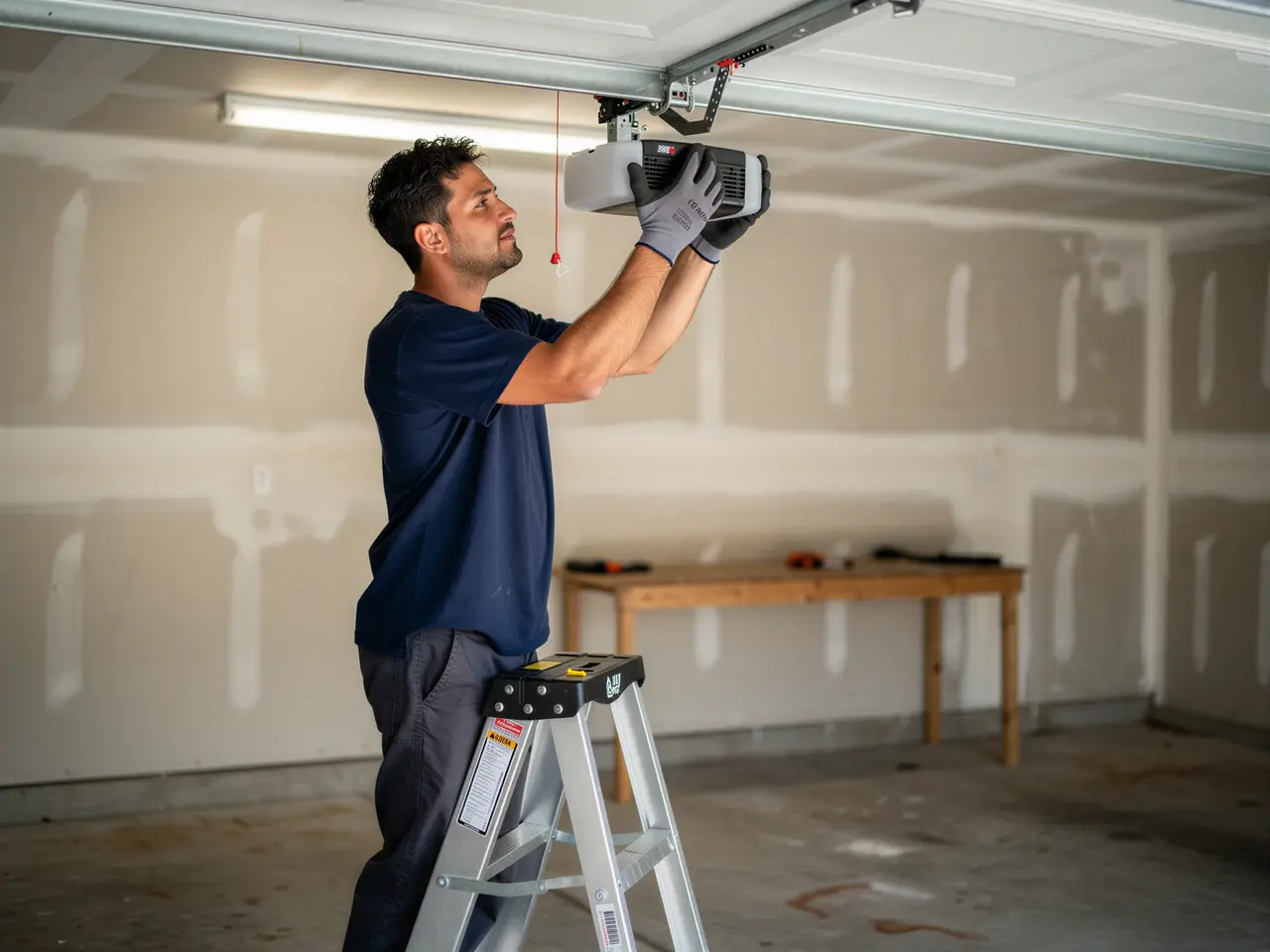
Installing or replacing an opener here isn't a plug-and-play job on most houses. A lot of the housing stock in this part of Fairfield County went up between 1955 and 1984, with the median build year sitting around 1968, and that means headers, track drops, and door weights that don't match what comes stock with a modern opener kit. Before anything goes on the ceiling, we measure the door's actual weight and balance it on the spring first - an opener fighting an unbalanced door burns out its gears in a year or two no matter how good the unit is. On older houses we often have to reinforce or relocate the header bracket because the original lumber wasn't sized for a belt-drive unit's mounting load. Wiring is the other piece: houses from this era rarely have a dedicated outlet near the center of the ceiling, so running power or confirming a safe tie-in is part of the quote, not an afterthought. We set the travel limits and force settings by hand and test the auto-reverse safety feature before we call the job done. None of this is exotic work, but skipping any one step is how a homeowner ends up with an opener that strains, reverses randomly, or drops the door - and that's the complaint we get called out for on installs that someone else rushed.
What Is on the Truck
We carry openers in belt-drive and chain-drive versions, in the horsepower ratings that match the heavier insulated doors common on homes from the 1960s and 70s build era across this service area. Beyond the opener itself, the truck stocks header brackets and reinforcement plates sized for older framing, extension and torsion-compatible mounting hardware, battery backup units, and the sensor pairs and wiring needed for a clean install rather than a workaround. We also keep a stock of standard trolley rail sections on hand because older ceiling heights and door heights vary more than new construction does. What we don't carry is every smart-home bridge or app integration on the market - if a specific brand's connected hub isn't something we stock, we'll tell you that up front rather than sell you a unit we can't fully support.
Why It Happens Here
The climate here falls in the severe end of the cold band, and that's the real driver behind opener failure on houses built in the 1968 era that makes up most of this area's stock. Cold grease in an old chain-drive unit thickens and makes the motor work harder on every cycle; add a door that's gained weight over decades from added insulation or a heavier replacement panel, and a 1/2-horsepower opener from an earlier remodel is now undersized for the load it's lifting on a 10-degree morning. Across the 21 named neighborhood areas in this service territory, the pattern repeats: original openers or their first replacements, installed decades ago, finally give out in the same cold snap that causes torsion springs to seize. We size replacement units to the door's actual weight and this region's temperature swings, not to whatever horsepower number is cheapest on a shelf.
How It Shows Up
Most calls start the same way: the opener runs louder than it used to, or it starts the cycle and then stops partway, especially on the first cold mornings of the season. Some homeowners notice the light flashes and the door reverses before it closes - that's usually the safety sensors or the force setting, not the motor itself, and it's a cheaper fix if caught early. Others find the remote working but the wall button dead, which usually points to failed wiring behind an outlet that was never properly run when the house was built. By the time the opener won't lift the door at all, the motor or gear set has usually already failed, and at that point replacement costs less over time than another repair. We'll always tell you honestly which side of that line your opener is on before we recommend new equipment. See our full range of work on the home page.
Frequently asked questions
How do I know if I need a new opener or just a repair?
If the motor runs but the door won't move, or it's reversing before it closes, that's often a sensor or force-setting fix. If the motor struggles, grinds, or won't engage at all, the gear set has likely failed, and on a unit old enough to match this area's housing stock, replacement usually costs less than a repair that won't last.
Will a new opener work with my older garage door?
Usually yes, but we check the door's weight and header framing first. A lot of houses from the 1960s and 70s era in this area have headers sized for lighter original doors, so we may need to add reinforcement before mounting a heavier-duty unit.
Do you install smart or app-connected openers?
We install openers with standard Wi-Fi and remote features that we stock on the truck. If you want a specific brand's proprietary smart-home hub, ask us first - we'll tell you straight whether it's something we carry and fully support.
Why does my opener struggle more in winter?
Cold thickens the grease in chain-drive units and makes the motor work harder on every lift, and that's worse on an opener already undersized for the door's weight. In this climate band, that combination is a common reason openers that limped along all summer finally quit in a cold snap.
Related guides
By Neighborhood
Opener Installation across the Norwalk area
We also handle opener installation in these Norwalk-area suburbs.
Book garage door service in Norwalk
Call now or request a quote - tell us what the door is doing and where you are.