Norwalk, CT · Garage Door Service
What "Built Before Insulation Rules" Means for Your Norwalk Garage Door
Norwalk's garage doors mostly date to the 1960s and 70s, built before insulation codes existed, a real problem once a cold Connecticut winter sets in hard.
- Repairs & new doors
- Springs & openers
- Serving 8 nearby communities
The Situation
Most of the housing in and around Norwalk went up between 1955 and 1984, with the median build year landing around 1968. That's not a small detail - it's the whole reason this is a recurring job here. Across the 21 named areas we cover, the bulk of the stock is 1960s and 70s construction, and the garage doors on those houses are, in a lot of cases, still the originals or a direct swap from the same era.
Back then, garage doors weren't built to hold heat. They were a single layer of steel or wood, no foam core, no thermal break at the bottom seal, no insulated glass if there were windows at all. That wasn't a flaw at the time - insulation standards for garage doors simply hadn't caught up yet. It becomes a problem decades later, when that same door is still hanging on the same track, now with worn rollers and a spring rated for a lighter panel than what's sometimes been bolted on since.
If your house falls in that 1955-1984 window, which a lot of Norwalk does, there's a good chance your door predates any insulation requirement entirely.
How Local Conditions Play In
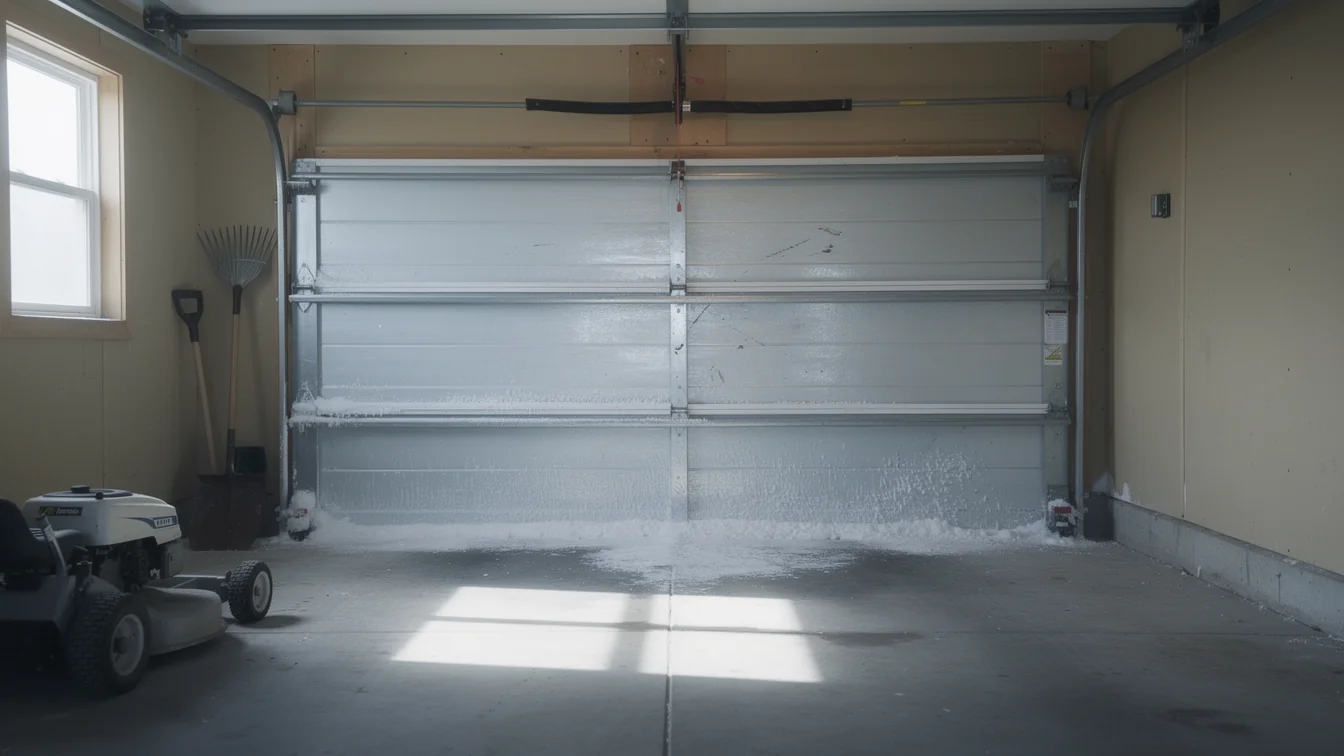
Norwalk sits in a climate zone rated cold and severe, which is the other half of this problem. An uninsulated door is just a draft source in mild weather. In a cold-climate winter, it's a cold sink sitting on the wall that shares space with the house - heat moves through that steel skin fast, and if the garage is attached, that cold transfers straight into whatever room is on the other side of the shared wall.
The age of the door compounds the cold. A 1960s or 70s panel wasn't engineered with a thermal break, so metal conducts temperature straight through, and the bottom seal on hardware that old has usually hardened or cracked, which means the gap at the floor is doing the same job as an open window. None of this is a defect you caused. It's a door doing exactly what it was built to do fifty years ago, in a climate that's asking more of it now.
We're not going to tell you every old door needs replacing immediately - plenty still open and close fine. But if you're feeling a cold garage, or ice forming at the bottom seal, that's the house telling you the door and the climate have stopped matching up.
The Cost of This Job
We don't have a flat number to hand you here, and we're not going to invent one. What we can tell you is how the decision tends to shake out across this service area. With 70,601 owner-occupied houses and a median household income of $168,810, replacing an old uninsulated door is, for most owners here, a planned project rather than a crisis purchase - something scheduled rather than forced.
The honest tradeoff is repair versus replace. If the panel itself is sound and the issue is a spring, a cable, or worn rollers, repairing the original door is usually the cheaper and faster path, even if it stays uninsulated. If the panel is dented, the seams have separated, or the insulation question is really an energy-bill question, replacement with an insulated door is the job that actually solves it - repair just buys another season.
Across 106,487 households in the wider service area, a meaningful share are sitting on doors from that same 1955-1984 build window, which means this isn't a rare call for us. It's a known category of job with known tradeoffs, not a guessing game.
When to Get Help
Call before the door fails outright, not after. A few signs that the age of the door has caught up with it: the bottom seal has gone stiff and cracked, you can see daylight at the corners when it's closed, the panel face feels cold to the touch in a way the rest of the wall doesn't, or the spring looks original and has never been swapped.
An honest limitation on our end - if the panel is original to a 1960s or 70s build and a replacement part isn't something still made, we're not going to pretend we can source an exact match. At that point the real fix is a new door section or a full replacement, not a repair that papers over the problem for another year.
If the door is just hard to lift, slow on the track, or noisy, that's usually hardware - springs, rollers, cables - and worth a call before it turns into a stuck door on a ten-degree morning. If the issue is heat loss or a door that's visibly reached the end of its life, that's a different conversation, and we'll tell you straight which one you're having.
Frequently asked questions
Is my garage door too old to insulate?
If it's a solid 1960s or 70s panel in decent shape, we can sometimes retrofit insulation to the existing door. If the panel is warped, dented, or the seams have separated, retrofitting won't hold up and a full replacement is the better use of money. We'll tell you which situation you're in before doing anything.
Why does my garage feel so cold in winter?
In a cold-climate area like this, an uninsulated door built before insulation codes existed - common on houses from the 1955-1984 era - conducts outside temperature straight through the panel. Add a hardened or cracked bottom seal, and the garage ends up close to outdoor temperature even with the door shut.
Should I repair my old door or just replace it?
Depends what's wrong. A broken spring, cable, or roller on an otherwise sound door is a repair - cheaper and done the same day. A dented panel, separated seams, or a door that's cold to the touch and driving up heating costs is a replacement conversation, since repair won't fix the insulation problem.
Related garage door services in Norwalk
More garage door guides
Book garage door service in Norwalk
Call now or request a quote - tell us what the door is doing and where you are.