Norwalk, CT · Garage Door Service
Garage Door Repair for New Canaan Homes
Serving New Canaan's 1960s-70s housing stock from Norwalk, 5 miles away. Torsion spring, opener, and panel repair suited to homes built around 1968.
- Repairs & new doors
- Springs & openers
- Serving 8 nearby communities
Old Streets and New Ones
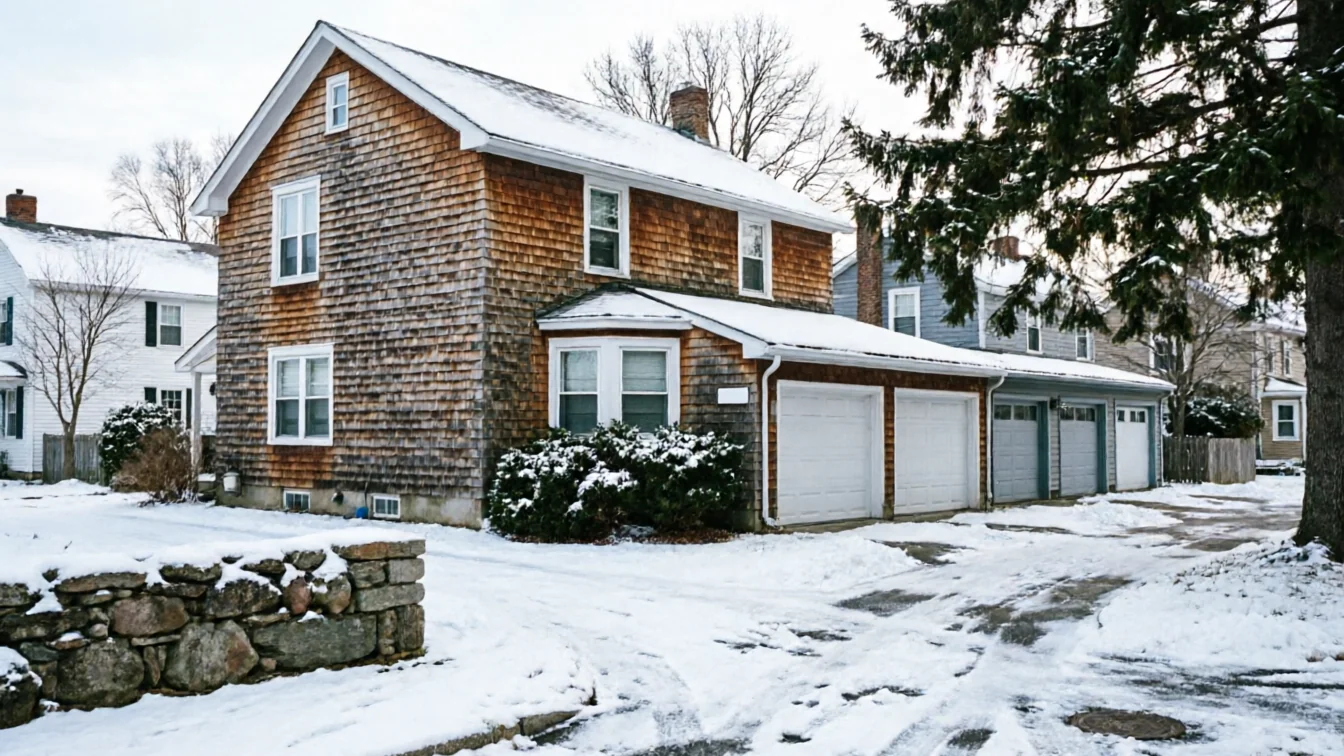
New Canaan sits about 5 miles from our Norwalk shop, close enough that a morning call doesn't eat the whole day in windshield time. The town's growth didn't happen all at once - you've got older sections mixed with the wave of building that ran through the area in the 1960s and 70s, and that mix matters more than people think when it comes to garage doors. A house built in 1962 and one built in 1978 can have completely different track widths, spring tension, and opener mounts even on the same street. We don't pretend to know every cul-de-sac in town, but we do know that the hardware question in New Canaan is almost always tied to which decade the house went up in, not which neighborhood it's in.
We come out from Norwalk for calls here, we don't keep a crew stationed in town, so what we're good at is showing up ready for the specific door your build era put on your house, instead of guessing on site.
The Houses Here
The median year built across this part of our service area is 1968, and New Canaan's housing lines up with that pattern - most of what's here went up between 1955 and 1984. That's a 30-year window, but it's a narrower one than it sounds for garage doors, because the door industry changed its standard hardware more than once in that stretch. Early in that range you're more likely to find single-layer steel or wood doors on side-mounted torsion springs. Later builds start showing extension springs overhead and lighter track rails, which was cheaper to install but wears differently over 50-plus years.
There are roughly 2,726 households in this part of town, and the service area overall covers 70,601 owner-occupied houses against 106,487 total households - a reminder that most of what we're working on here are owner-occupied homes, not rentals, which usually means owners who've lived with the same door a long time and know exactly when it started acting different.
The Usual Work Here
Given the 1968 median build year, the calls we get from this area skew toward original or near-original hardware reaching the end of its service life: torsion springs that have cycled tens of thousands of times, galvanized cable starting to fray at the drum, and openers from the chain-drive era that are on their second or third logic board replacement. Winter is when it shows - this area sits in a climate zone with severe cold stretches, and cold-stiffened grease combined with old springs is a common reason a door that worked fine in October won't open in January.
Panel damage is less climate-driven and more just age - wood composite doors from the 1960s-70s builds delaminate at the bottom panel from decades of ground moisture, something newer steel doors with better bottom seals don't suffer the same way. We'll tell you straight when a repair isn't worth it: if the door is original to a 1960s build and the track is bent along with a cracked panel, replacement usually costs less over five years than chasing parts for obsolete hardware.
What the Housing Means for Your Door
Because so much of New Canaan's housing dates to the 1955-1984 run, parts availability is the real issue, not whether the door can be fixed. Side-mounted torsion springs and older extension spring setups from that era aren't things big box stores stock - we carry what we need on the truck, but lead time on a less common size can add a day or two if it's not something we normally run. That's the honest limitation: we're not instant on every part, especially for older or oddball hardware.
The climate factor matters too. Severe cold winters put more strain on steel springs and plastic gears than a mild climate would, so an opener that's lasted 20 years in a warmer region might only get 12-15 here. If your house falls in that 1968-ish build window, it's worth getting the torsion spring and cable checked before they fail outright - a controlled inspection beats a door that comes down fast on a cold morning.
Frequently asked questions
Do you have a shop in New Canaan?
No, we run out of Norwalk, about 5 miles away. We come out for service calls in New Canaan but don't keep a depot or crew stationed in town.
Why does my 1960s garage door use different springs than my neighbor's newer one?
Hardware standards changed over the decades. Houses built earlier in the 1955-1984 range often have side-mounted torsion springs, while later builds in that same window moved to overhead torsion or extension setups. The decade your house went up in tells us more than the street it's on.
Is it worth fixing an original door from the 1960s?
Sometimes. If the track and frame are straight and it's just a spring or cable, repair makes sense. If the panel's delaminated and the track's bent, replacement usually costs less over time than hunting parts for old hardware.
Does the cold weather here actually affect garage doors?
Yes. This area sits in a climate zone with severe cold stretches, and cold-stiffened grease plus aging springs is a common reason doors that worked fine in fall stop opening smoothly in winter.
Garage door services in New Canaan
Every service our crew runs in New Canaan, CT.
Book garage door service in Norwalk
Call now or request a quote - tell us what the door is doing and where you are.