Norwalk, CT · Garage Door Service
What That Sound Coming From Your Garage Door Actually Means
What a grinding, popping, or slapping garage door sound means in Norwalk homes built 1955-1984, and when a noise is a $20 fix or a spring about to let go.
- Repairs & new doors
- Springs & openers
- Serving 8 nearby communities
The Situation
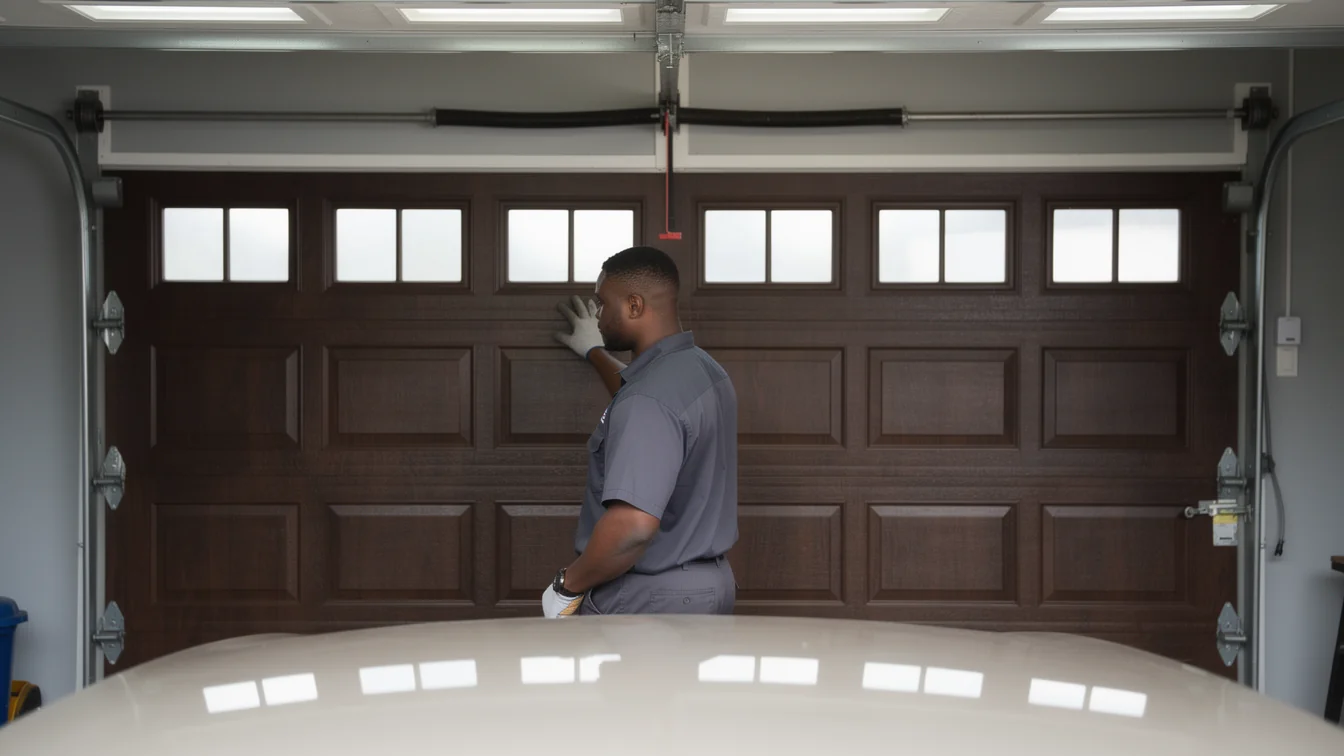
Most of the calls we take start the same way: a homeowner heard something and wants to know if it's serious. The honest answer is that the sound tells you a lot if you know what to listen for. A rhythmic thump as the door travels usually means a flat spot on a roller, not a structural problem. A sharp bang followed by the door going dead on one side is almost always a broken torsion spring, and that one you don't drive past.
Norwalk's housing stock matters here more than people expect. Across the service area the typical house was built between 1955 and 1984, with a median build year around 1968. That means a huge share of doors and openers in this area are not original - they've been replaced once, sometimes twice, since the house went up - but the track and header framing behind them often still date to the original build. A noise that would be nothing in a newer frame can mean a loosened bracket in a 50-plus year old header.
We hear a lot of slapping and rattling from extension-spring setups that were common on the single and two-car garages built in that era, where the spring sits along the horizontal track instead of over the door. Those systems age differently than torsion setups, and the noise they make before failure is distinct - a looser, more metallic rattle rather than a single crack.
How Local Conditions Play In
Norwalk sits in a severe cold climate band, and that changes what a noise means depending on the season. Cold-stiffened lubricant on rollers and hinges is the single biggest cause of a squeal or groan that shows up every winter and quiets down by May. If your door has sounded fine for months and suddenly complains the first cold week, that's grease, not damage - usually.
What's different about diagnosing this across the 21 named areas we cover, from Rowayton up through the inland neighborhoods toward Wilton and Weston, is the mix of garage construction. Homes closer to the water tend to have shorter, more exposed runs between the garage and the house, which means more direct wind load on the door panel itself - a different kind of noise, a hollow drumming in gusts, versus the mechanical clicks and pops you get from hardware fatigue. Inland, in the older pockets built in the 1960s and 70s, we see more wear on the torsion bar bearing plates from decades of temperature swing between a cold garage and a heated house wall.
A noise that's purely seasonal and goes away on its own isn't a job. A noise that's new, that doesn't track with temperature, or that comes with the door hesitating or reversing partway - that's hardware telling you something is loosening or cracking, and winter cold just makes it worse faster than a mild season would.
The Cost of This Job
We're not going to hand you a number here we can't back up, because what drives the cost swings hard based on what's actually making the noise and how old the hardware is. A roller swap on a door that's otherwise sound is a small job. A full torsion spring replacement on a heavier insulated double door - more common in the larger lots we see in the higher end of this market - costs more in parts and takes longer because of the tensioning work and the safety setup involved.
What we can tell you honestly: if your door and track date back close to the house's original build year, you're more likely looking at a repair that turns into a conversation about replacement, because matching 1960s-era hardware to a modern opener isn't always straightforward, and parts for some of those original setups simply aren't made anymore. That's not us upselling you - it's a real limitation. We'd rather tell you a part isn't available than quote a repair we can't actually deliver.
If the noise is new and the door still runs smooth and level, that's usually the cheaper half of this conversation. If the door is sagging, reversing, or the spring has visibly separated, you're past the point where a quiet fix is on the table.
When to Get Help
Call before the door stops working, not after. A spring that's making noise but hasn't broken yet is a controlled job. A spring that's already snapped is a door that can drop, and that's not something to wrestle with on your own, especially on the heavier insulated doors common in the colder, older housing stock around here.
Get someone out if you hear a single loud bang and the door won't move, if the noise is new and getting louder week to week, or if the door looks crooked in the frame when it's down. Don't wait on those. A seasonal squeal that shows up every winter and fades by spring can usually wait for a scheduled visit rather than an emergency one - that's the kind of call where we'd rather save you the rush fee and get there on a normal day.
If you're not sure which category you're in, describe the sound when you call. "Grinding when it opens" and "a loud crack then nothing" point our guys toward completely different trucks worth of parts, and it helps us show up ready instead of guessing on your driveway.
Frequently asked questions
My garage door squeals every winter but is fine in summer - is that serious?
Usually not. In a severe cold climate like Norwalk's, rollers and hinge pins stiffen up when temperatures drop, and that's the most common cause of a seasonal squeal. If it fades once things warm up and the door still runs level and smooth, it's a lubrication issue, not a hardware failure.
What does a loud bang followed by a dead door mean?
That's almost always a broken torsion spring. The door will feel very heavy or won't move at all on one side. Don't try to force it open manually - the spring under tension can be dangerous. This is a same-call situation, not a wait-and-see one.
Is a rattling noise from an older door worth worrying about?
Depends on the system. A lot of Norwalk homes built in the 1960s and 70s have extension-spring setups along the horizontal track, and a metallic rattle there can mean the spring or pulley is wearing out. It's worth a look before it fails outright, especially heading into colder months.
Do you replace parts or just the whole door?
We repair what can be repaired. The catch is that hardware matching original 1960s and 70s builds isn't always available anymore, so sometimes a repair conversation turns into a replacement one - not because we want to sell a door, but because the part genuinely doesn't exist.
Related garage door services in Norwalk
More garage door guides
Book garage door service in Norwalk
Call now or request a quote - tell us what the door is doing and where you are.