Norwalk, CT · Garage Door Service
When the Opener Dies and the Power Goes With It
A look at how Norwalk's 1955-1984 housing stock and cold-severe winters affect garage door openers during power outages, and what it actually costs to fix.
- Repairs & new doors
- Springs & openers
- Serving 8 nearby communities
The Situation
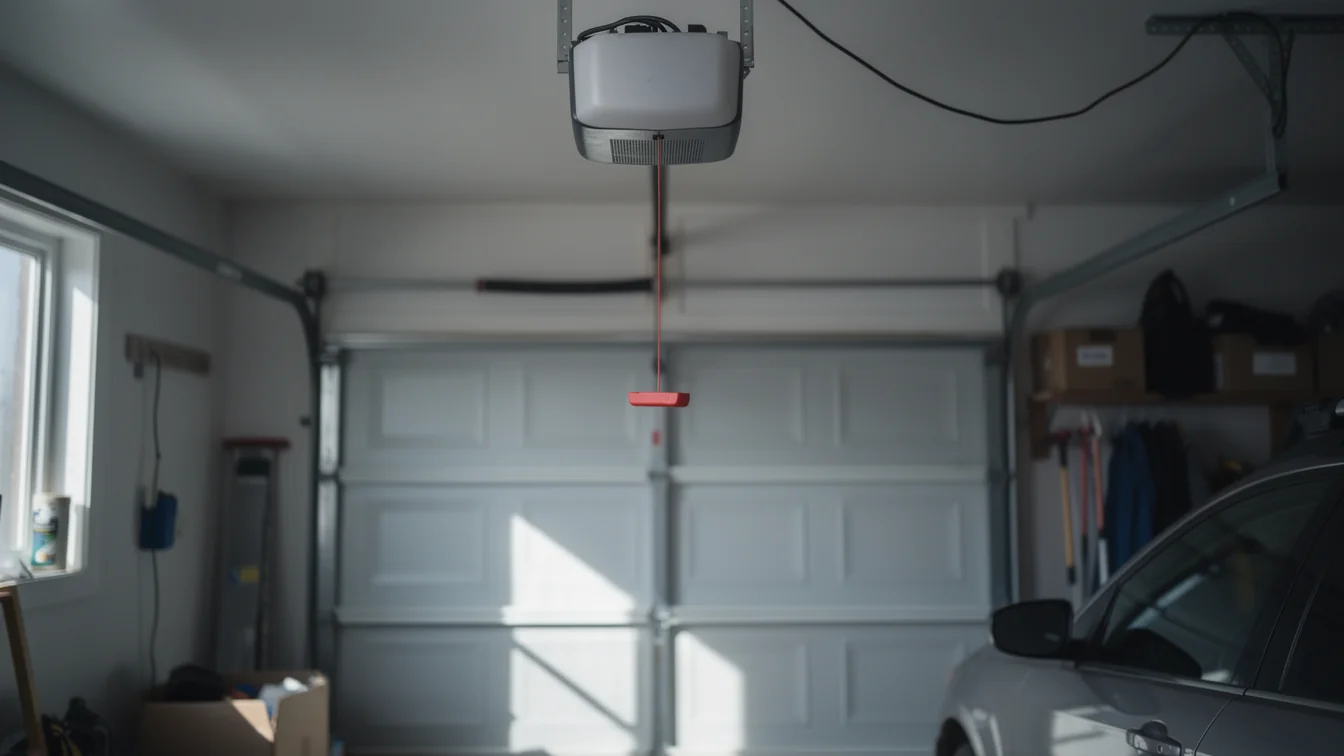
A big share of Norwalk's houses were built between 1955 and 1984, median year 1968, which means a lot of garages still have the opener that came with the house, or the one swapped in sometime in the 80s or 90s. Those units are chain-drive, hardwired to the house circuit, and have no battery backup built in. That's fine until the power goes out. Then the door is stuck wherever it was when the lights cut, and if you're not inside already, you're not getting the car out without pulling the manual release and lifting the door by hand - which on an old torsion spring that's lost tension is harder and riskier than it sounds. Across the roughly 106,487 households and 70,601 owner-occupied houses in this service area, a meaningful number are running openers that predate battery backup as a standard feature entirely. The call we get isn't usually "my opener broke." It's "the power came back on and the door still won't move," which is a different problem - sometimes the opener logic board needs a reset, sometimes the motor itself didn't survive the surge when power snapped back on.
How Local Conditions Play In
Norwalk sits in a cold-severe climate band, and that matters for two reasons beyond the obvious one. First, cold makes steel springs and nylon gears more brittle, so a power outage during a hard freeze is also when the mechanical parts are least forgiving of a manual lift. Second, if your place is closer to Rowayton, about two miles south-southwest, salt air off the water works on opener gears and exposed hardware faster than it does further inland toward Wilton or Ridgefield, eight to sixteen miles out. That corrosion doesn't cause the outage, but it's often why a unit that's already marginal fails right when a storm knocks the power out rather than on some quiet Tuesday. Houses nearer Darien and Westport, both about four miles off, share the same coastal exposure and the same 1960s-70s build era, so the pattern holds across that whole stretch of the shoreline side of town. None of this means the opener fails because of weather alone - it means weather plus age plus an outage is when a marginal unit finally quits for good, and that's the combination we see most.
The Cost of This Job
We don't have a price list to hand you here, and I'd rather say that than make one up. What drives the cost on this kind of job is usually three things: whether the opener itself needs replacing or just a reset and a part, whether you want battery backup added so the next outage doesn't strand the car, and whether the spring system is original to a house built in that 1955-1984 window and needs attention at the same time. A straight reset after a power outage is a small job. Swapping a dead 1970s-era chain drive for a current opener with backup is a bigger one, and if the torsion springs are original too, that's a separate repair stacked on top. Given the median household income across this service area runs well above the national figure, most owners we talk to choose to replace the aging opener outright rather than keep patching a unit that's older than their car. That's a reasonable call, but it's not the only right one - a working 20-year-old chain drive doesn't need replacing just because it's old.
When to Get Help
Call before you force anything. If the door won't move after a power outage and you've already checked that the opener has power, don't keep hitting the wall button or yanking the manual release repeatedly - on an old torsion spring that's lost tension, that's how someone gets hurt. If this is the second or third outage-related failure this year, that opener is telling you it's done, not just napping. And if you're hearing grinding or the door moves a few inches and stops, that's usually the spring, not the opener, and it's not a job to free up yourself regardless of how handy you are. One limitation worth saying plainly: battery backup keeps the door running for a limited number of cycles during an outage, not indefinitely, so it's a bridge to get the car out, not a permanent fix for an unreliable power supply.
Frequently asked questions
Why does my opener stop working every time the power goes out, even after it comes back on?
Often the logic board or motor took a small surge when power snapped back on, especially in older units without surge protection built in. If your opener dates back to the house's original 1960s or 70s wiring, it may just be at the end of its working life and the outage was the final push.
Is battery backup worth adding to an older opener?
If you're on a chain-drive unit from before backup was standard, adding it means you're not stuck lifting the door by hand during the next outage. It won't run the opener forever on battery alone, just long enough to get the car in or out, which is usually all people need.
Does the cold actually make this worse?
Yes. In a cold-severe climate band like this one, steel and nylon parts get more brittle, so a manual lift during a freeze is harder on the springs than the same lift on a mild day. It's not the direct cause of failure, but it's often the final straw on an already aging opener.
Related garage door services in Norwalk
More garage door guides
Book garage door service in Norwalk
Call now or request a quote - tell us what the door is doing and where you are.