Norwalk, CT · Garage Door Service
Keeping an Older Norwalk Garage Door Running Through Another Connecticut Winter
Garage door maintenance in Norwalk, CT for homes built mostly between 1955 and 1984 - tune springs, cables, rollers, and openers before cold-weather failures set in for good.
- Repairs & new doors
- Springs & openers
- Serving 8 nearby communities
What the Repair Takes
A real maintenance visit is not a five-minute once-over. We check torsion spring tension and winding, because most Norwalk garage doors date to the housing boom between 1955 and 1984, when this area filled in with the 1960s and 70s stock that now needs seasonal attention. On a door that old, the spring has usually been re-tensioned or replaced at least once, and the hardware around it - end bearing plates, set screws, the center support - has to be checked, not assumed good.
We inspect tracks for level and plumb, since decades of freeze-thaw cycling shift foundations and slab edges just enough to throw alignment off a few degrees. Rollers get pulled and checked for flat spots or cracked bearings. Cables get checked strand by strand near the bottom fixture, where fraying starts and is easiest to miss. We test opener force and limit settings, because a door that's gotten heavier to lift by hand is also harder on the opener's gears and belt.
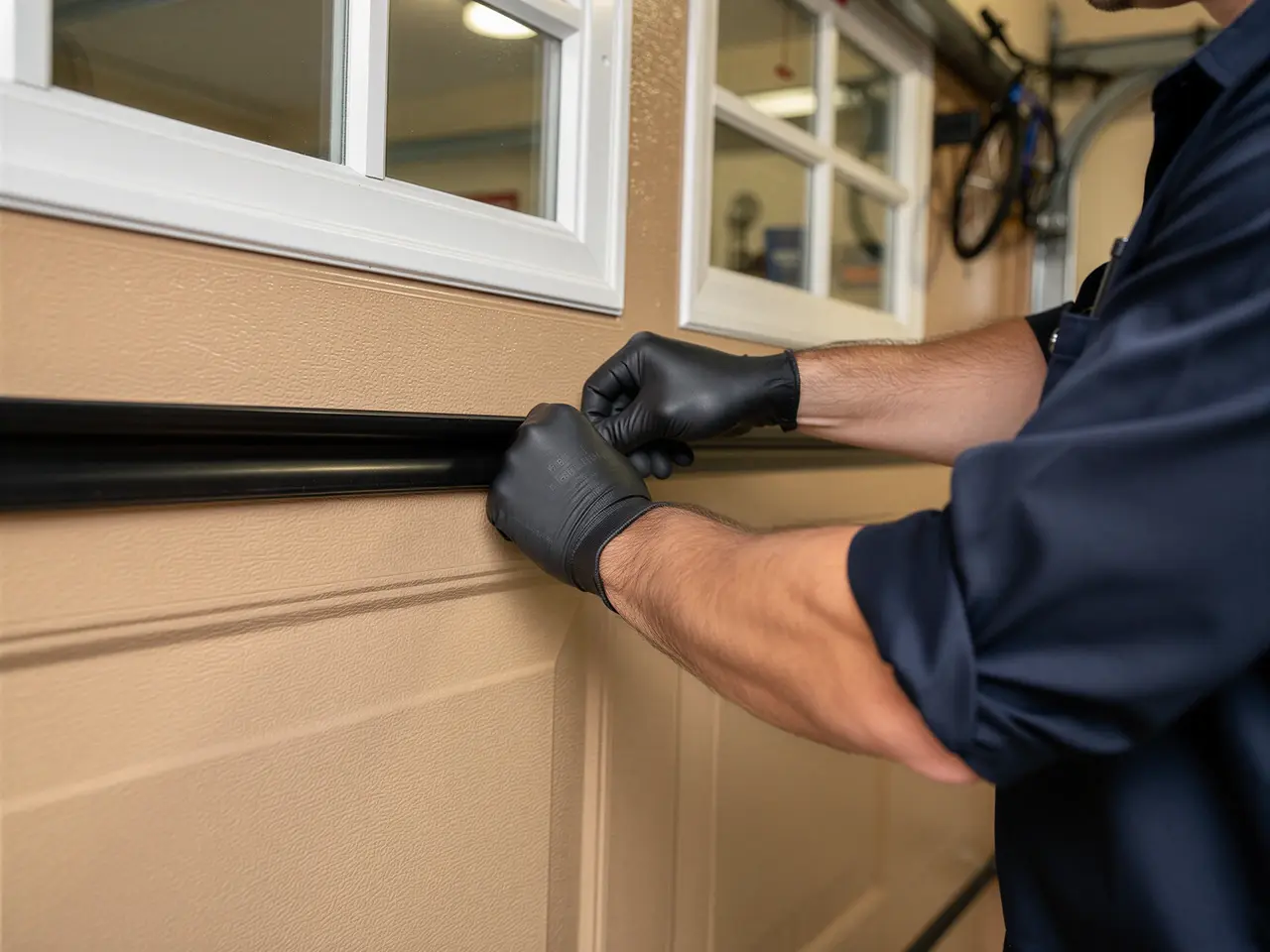
We finish with weatherstrip and bottom seal, since a cracked or compressed seal lets cold air and road salt spray into the garage all winter. One honest limit here: if the opener logic board itself is failing, that's a repair or replacement call, not something a maintenance visit fixes.
What Is on the Truck
The truck carries torsion springs in the wind and wire sizes that match the door eras common to this area - mostly sectional steel doors installed or replaced since the 1960s and 70s, on standard torsion tube setups rather than the older side-mounted extension systems you'll still find on a handful of original garages. We stock rollers in both nylon and steel, cables in standard lengths, and lubricant rated to not stiffen up in a hard freeze, which matters here more than it does somewhere with a milder winter.
We carry weatherstrip and bottom seal stock sized for the jamb dimensions typical of homes built in this window, along with the fasteners and brackets that loosen on a door that's been opened and closed for fifty-plus years. Hinges and center-section hardware are stocked in the common sizes too.
What we don't carry on the truck: obsolete opener circuit boards or remote receivers for discontinued models. If a door has an opener old enough that the manufacturer no longer makes the control board, we can tell you that on the spot, but the part itself may need to be special-ordered, and that's a lead-time conversation, not a same-visit fix. We'd rather say that up front than pretend otherwise.
Why It Happens Here
This service area's housing stock skews old - built mostly between 1955 and 1984, with a concentration in the 1960s and 70s across the 21 named areas that make up the broader Norwalk market. That means original or first-replacement hardware is common, and original hardware was never built to run maintenance-free for sixty years. Springs lose a measurable percentage of their lifting force every year regardless of use, and a door that's gone a decade or more without a tension check is usually working harder than its opener was designed for.
The climate compounds it. This area sits in a cold-winter band severe enough that steel contracts measurably in a hard freeze, which tightens spring coils, stiffens cable, and thickens old grease right when the door is being used the most - mornings and evenings in the dark, in the cold, under load. A garage that isn't heated sees that swing every day all winter.
With 70,601 owner-occupied houses across the service area and a median household income of $168,810, most owners here choose a maintenance call over a full replacement when a door starts acting up, which is usually the right call on a structurally sound door with aging hardware - not on a door whose panels are cracked or whose track is bent beyond adjustment.
How It Shows Up
On an older door, the first sign is usually sound before it's a failure. A spring that's losing tension on a 1960s or 70s-built garage will start to groan, pop, or bang during the first real cold snap of the season - that's the steel contracting around hardware that's already tired. The opener starts straining, drawing longer to lift the door and sometimes reversing partway up because it reads the extra resistance as an obstruction.
Cables show up differently: a slight droop on one side of the door, or a door that closes slightly crooked, points to a cable starting to stretch or fray near the bottom fixture. Rollers going bad sound like a grinding or squeal that gets worse in cold weather, since old grease stiffens and stops doing its job exactly when the door needs it most.
Weatherstrip failure is quieter - you notice it as a cold draft along the bottom of the door, or road salt and slush tracked further into the garage than usual. None of these on their own mean the door needs replacing. They mean the hardware is at the point in its life where it needs checking before one of these small signs turns into a spring letting go or a cable snapping under load.
Frequently asked questions
How often should I get my garage door serviced in Norwalk?
Once a year is reasonable for most doors in this area, ideally before the cold really sets in, since springs and cables under tension are most likely to show stress in a hard freeze. A door on original hardware from the 1960s or 70s benefits from a check even more often, since the components are past their expected service life.
Is maintenance worth it on an older door, or should I just replace it?
If the door panels, track, and frame are sound and the hardware is just worn, maintenance usually extends the door's life for years at a fraction of replacement cost. If the opener's control board is obsolete or the panels are cracked or rusted through, replacement starts making more sense than repeated repair calls.
Why does my door make noise only in cold weather?
Steel springs and cables contract in a hard freeze, which tightens already-worn coils and stiffens old lubricant right when the door is working hardest. A door that's quiet in summer and noisy in winter is usually telling you the hardware is near the end of its working life, not that something is suddenly broken.
Can you service openers as old as the house?
We can check and tune most openers on the truck, but if the control board itself is obsolete, that part may need to be special-ordered rather than fixed on the same visit. We'll tell you that at the door, not after the fact.
Related services
By Neighborhood
Maintenance across the Norwalk area
We also handle maintenance in these Norwalk-area suburbs.
Book garage door service in Norwalk
Call now or request a quote - tell us what the door is doing and where you are.