Norwalk, CT · Garage Door Service
Garage Door Maintenance for Ridgefield Homes
Garage door maintenance for Ridgefield's roughly 9,237 households, built mostly around 1973, serviced from our Norwalk base 16 miles away.
- Repairs & new doors
- Springs & openers
- Serving 8 nearby communities
The Cost of This Job
Ridgefield is a town of about 9,237 households, which is a small enough number that we're not running trucks through here every day the way we might closer to Norwalk. We come out for maintenance visits, but we're driving 16 miles each way to do it, and that travel is baked into how we schedule the day rather than something we can pretend away. We don't have a branch here, so the honest answer on cost is that a maintenance visit reflects a trip out and back, not a five-minute drop-in from around the corner. What we won't do is quote you a flat number without seeing the door - a standard torsion spring tune-up runs different than a job where rollers are shot and the track is out of plumb. If you're bundling maintenance with a repair, say so when you call, because it changes how we route the day.
How It Shows Up
Most of what we see in Ridgefield traces back to the age of the housing stock - a lot of these homes were built around 1973, which puts the garage door hardware squarely in the torsion-spring era rather than the older extension-spring setups you'd find on an earlier house. That means when something starts to go, it's usually the spring losing tension gradually, not snapping without warning - you'll notice the opener straining, the door hanging a little crooked when it's half open, or a grinding sound off one side of the track. Rollers in houses this age are often the original steel ones, worn oval instead of round, which throws a faint rhythmic thump every time the door travels. None of this is dramatic. It shows up as a door that's slower, louder, or a few degrees off level - not as a door that won't move at all.
Why It Happens Here
This part of Connecticut sits in a cold, severe climate band, and that matters more for garage doors than people expect. Cold tightens steel springs and stiffens the lubricant in the coils, so a spring that's been fine all summer can start binding and squealing the first hard freeze of the season. Metal track brackets contract in the cold too, which is often what turns a quiet track into one that pops or cracks on a frigid morning. None of this is unique to any one house - it's a function of the climate band Ridgefield sits in, combined with hardware that's now been through roughly fifty winters since the house went up around 1973. Older lubricant and original hardware simply don't handle that cycle as gracefully as they did new.
What the Repair Takes
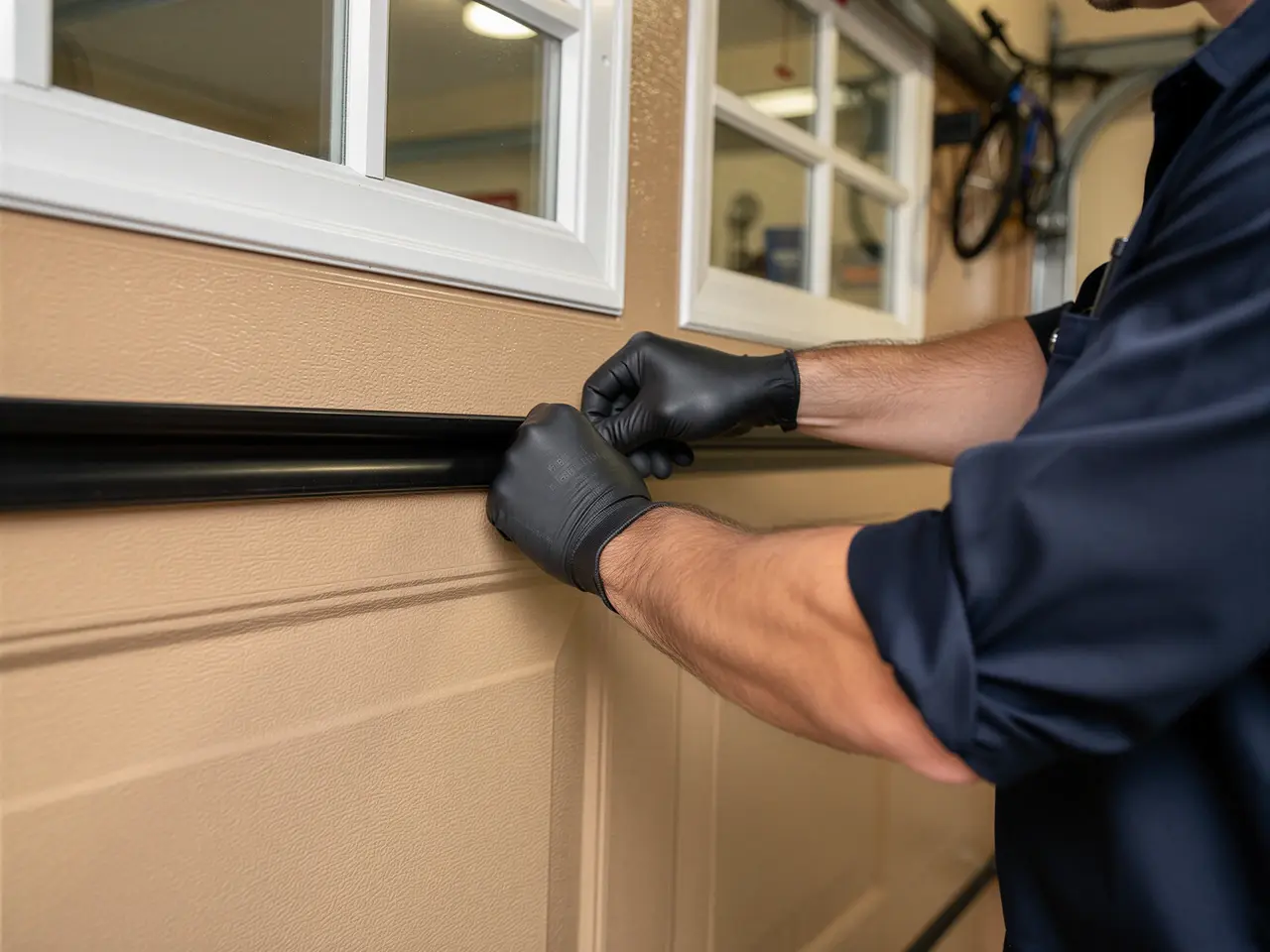
A standard maintenance visit covers lubricating the rollers, hinges, and track, checking spring tension and adjusting it if the door's drifting out of balance, tightening the hardware that's worked loose, and inspecting the cables for fraying. On a house from the early 1970s, we're also looking closely at whether the original rollers and hinges are worth keeping or whether they've worn enough that replacement now saves a service call later. We're honest when a part is borderline - sometimes the right call is to leave it another season rather than replace something that still has life in it. What we can't do on a maintenance visit is a full spring replacement if the one on the door turns out to be at the end of its life; that's a separate job; we'll tell you on-site if that's where things stand.
Can You Do This Yourself
Lubricating the rollers and hinges with the right garage-door-specific grease, wiping down the track, and visually checking that cables aren't fraying is reasonable homeowner work and worth doing between professional visits. What isn't reasonable is touching the torsion spring itself - those are under heavy tension, and on a door from this era the spring has usually never been replaced, which means you don't know its exact condition going in. We also wouldn't recommend adjusting the opener's force settings yourself if the door's already hanging unevenly, because you can mask a balance problem that's about to become a cable problem. If the door's noisy but moving smoothly and level, a homeowner can often buy time with lubrication alone.
What Can Go Wrong
The failure we see most in houses from this era is a worn roller finally seizing in the track, which forces the opener to pull harder than it's rated for and can strip the gear inside the unit - a cheap part turning into an expensive one because it sat unmaintained. The other is a spring that's been losing tension for months without anyone noticing, until one cold morning it lets go entirely, usually with the door partly open and nobody home to hear it. Skipping maintenance for a few seasons on a door built around 1973 doesn't usually cause a dramatic failure right away - it just means the small, cheap fixes pile up until they become one expensive one.
Frequently asked questions
How often does a garage door in Ridgefield need maintenance?
Given the cold, severe climate here and the age of most Ridgefield garage door hardware - a lot of it dating to around 1973 - we'd suggest a maintenance check once a year, ideally before the first hard freeze, since cold temperatures are what tends to expose a spring or track that's already drifting out of adjustment.
Do you have a branch in Ridgefield?
No. We work out of Norwalk and drive out to Ridgefield, about 16 miles each way, for maintenance and repair calls. There's no local depot, so we schedule Ridgefield visits around the route rather than offering same-day drop-ins.
Is my garage door's original hardware from the 1970s still safe?
Not necessarily. Rollers and hinges from a house built around 1973 have usually been through five decades of winters, and steel rollers in particular tend to wear oval over that time. We check these on every maintenance visit and tell you honestly if a part's worn enough to need replacing rather than lubricating.
More garage door services in Ridgefield
Book garage door service in Norwalk
Call now or request a quote - tell us what the door is doing and where you are.