
Norwalk, CT · Garage Door Service
New Garage Door Installation for Ridgefield's 1970s Housing Stock
Ridgefield homes built around 1973 often carry original hardware sized for doors half the weight of today's insulated models. We install from Norwalk, 16 miles out.
- Repairs & new doors
- Springs & openers
- Serving 8 nearby communities
The Cost of This Job
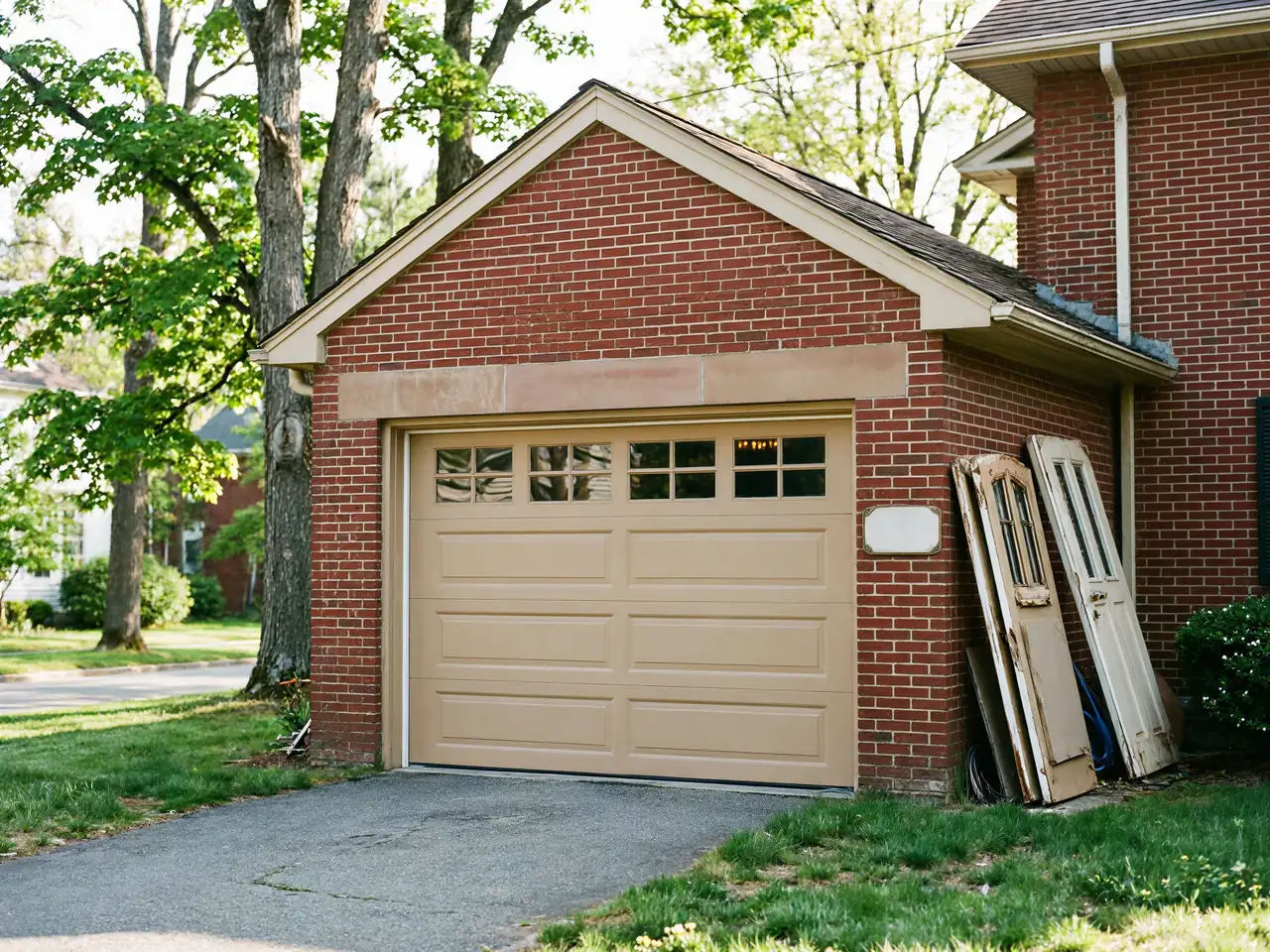
A straight number is hard to give without seeing the opening, the door style, and what's already on the wall, so we won't invent one here. What we can tell you is what drives the cost in a town like Ridgefield: most houses here went up around 1973, in the same wave that built out a lot of this part of the service area between 1955 and 1984. That means the opening is usually a standard 16x7 or 9x7, but the jamb and header were framed for a single-layer wood or steel door from that era - thinner, lighter, no insulation. Swapping in a modern two-inch insulated door often means new track, new hinges rated for the extra weight, and sometimes a reinforced end stile on the header side. None of that is optional if you want the door to run true for the next twenty years. We travel to Ridgefield from Norwalk, about 16 miles, so plan the install day around that rather than a same-morning call.
How It Shows Up
The giveaway in a 1973-era Ridgefield house is usually the opener straining on a door that looks fine. The original torsion or extension springs were sized for a door roughly half the weight of what's sold today, so when an owner upgrades to an insulated panel without resizing the spring system, the opener burns out early or the door reverses itself halfway up. Another pattern: tracks mounted for a lighter door flex and bind once a heavier door rides them, which shows up as a grinding sound at the top of the travel. On older stock, you'll also see single-layer aluminum or wood doors that have simply outlived their hardware - rollers worn oval, hinges stretched - where replacement makes more sense than another repair.
Why It Happens Here
This part of the state sits in a cold, severe climate band, and that matters more for installation than people expect. A door built for mild weather fifty years ago wasn't sealed for the temperature swings and moisture this area gets through winter. New installs here need bottom seals and weatherstripping rated for that, plus insulation values that actually hold up when the garage sits ten degrees below the house. Add in that household incomes in this service area run high - median around $168,810 - and a lot of owners are upgrading not because the old door failed, but because they want a door that matches the house and keeps the garage usable as a workspace or storage room through a Connecticut winter.
What the Repair Takes
An installation isn't a repair, but the on-site work breaks down similarly: pull the old door and track, check the jamb and header for square and rot (common in houses this age if the original flashing failed), set new track plumb, hang the new door, and size the spring system to the door's actual weight - not the old door's. On a 1973-built house we also check the header framing before mounting new track brackets, since lumber from that era can be thinner than what gets used now. If the opening itself needs reframing, that's carpentry beyond a straight door swap, and we'll say so rather than force a door into a bad opening.
Can You Do This Yourself
Hanging a single garage door panel is within reach for someone comfortable with a drill and a level, but torsion spring work is not a DIY job - the spring is under enough tension to cause real injury, and getting the wind count wrong on a double door throws the whole balance off. If you're swapping a 1970s-era lightweight door for a modern insulated one, the honest move is to get the spring size and track gauge checked before you buy the door, not after. A door that looks like a drop-in replacement online often isn't, once the actual opening and header are measured.
What Can Go Wrong
The most common mistake we see on houses from this build era is ordering a door by rough opening size alone, without accounting for a header that was framed for a lighter, thinner unit. The new door goes in, the spring is undersized for it, and within a year the opener is working overtime or the cable starts fraying. The other issue is cosmetic drift between old and new - a lot of these houses have a distinct look from the original build wave, and a door style that doesn't match can stand out more than owners expect once it's up. We'll flag both before the order goes in, not after.
Frequently asked questions
Will my 1970s opener work with a new insulated door?
Usually not without changes. Openers from that era are often undersized for the added weight of a modern insulated panel, and the travel limits may need resetting. We check the opener's horsepower and rail length against the new door's weight before installation, and replace it if it can't handle the load safely.
How far out is Ridgefield from your base, and does that affect scheduling?
Ridgefield is about 16 miles from our Norwalk location. It doesn't change the install itself, but it does mean we schedule the trip as part of the day rather than offering a same-hour call. Installations get booked, not walked in on.
Do older Ridgefield homes need extra insulation on a new door?
Given the cold, severe winter conditions this area sees, yes, it's worth specifying a door with real insulation value and proper seals rather than a bare panel. Houses built before insulation standards tightened often have garages that run noticeably colder, and a well-sealed door makes a measurable difference.
More garage door services in Ridgefield
Book garage door service in Norwalk
Call now or request a quote - tell us what the door is doing and where you are.