Norwalk, CT · Garage Door Service
What We Actually Do on a Norwalk Service Call
A breakdown of what our techs actually check and fix on a Norwalk service call, built around this city's 1960s-70s housing stock and cold-severe winters.
- Repairs & new doors
- Springs & openers
- Serving 8 nearby communities
The Situation
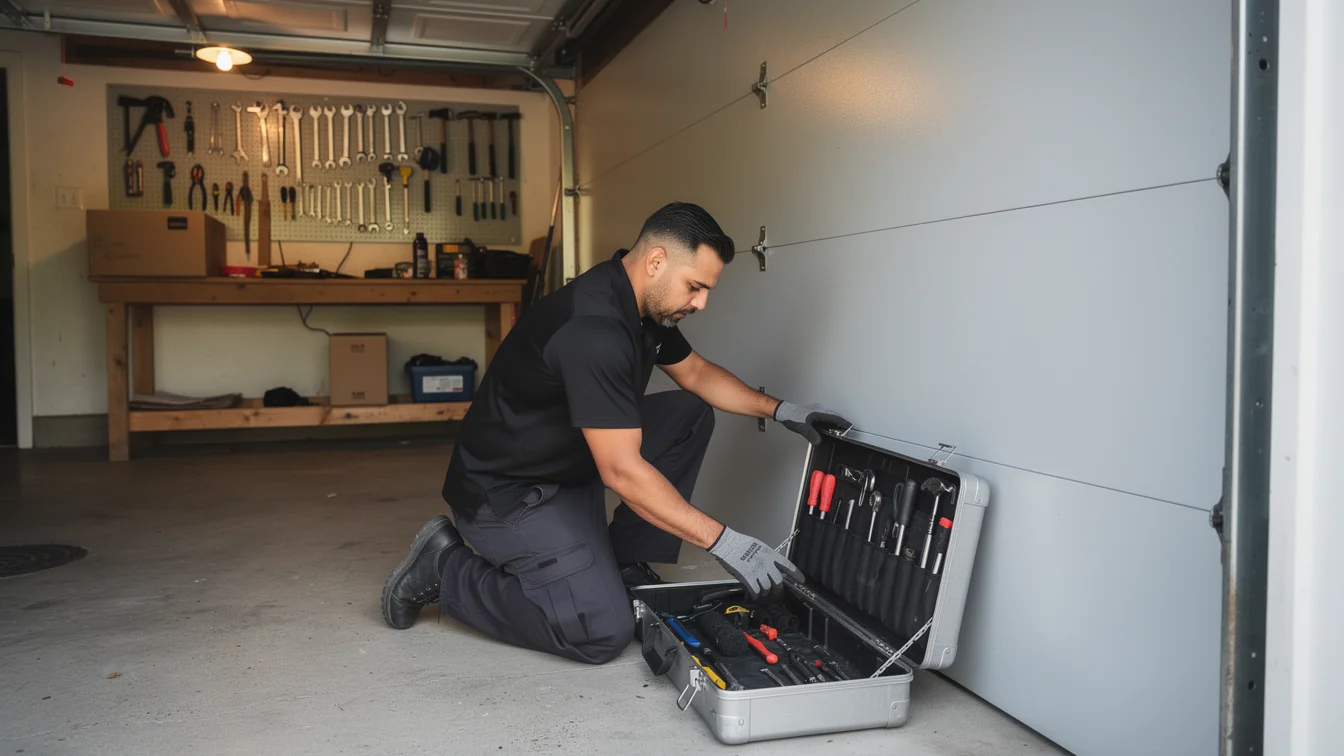
Most garage doors in Norwalk went up between 1955 and 1984, with the median build year sitting at 1968. That's not a trivia point - it tells us what's probably wrong before the truck even leaves the yard. A door installed in 1968 has outlived at least two or three spring cycles, the original opener if there was one, and almost certainly the factory rollers. When a homeowner calls and says the door is "just slow" or "making a grinding noise," nine times out of ten we're looking at original or near-original hardware that's simply worn past its service life, not a defect. Across the 21 named areas we cover, the housing stock is overwhelmingly 1960s and 70s construction, which means the service call almost always starts with the same question: is this door still on its original torsion spring, or has someone already swapped it once. That single fact changes the whole visit - what we test, what we expect to find seized up, and whether the fix is a part or the whole assembly. A service call here is rarely a mystery. It's usually a known failure point on a known era of door, confirmed on site.
How Local Conditions Play In
Norwalk sits in a cold-severe climate band. That matters more to a garage door than people expect, because the door is the largest moving object in most of these houses and it's mounted on steel track and steel springs that contract and expand with every hard freeze and thaw. On a door built around 1968, as the median here suggests, that's more than fifty winters of that cycle on the same hardware. We check torsion spring tension and track alignment on every call for this reason - not because we're padding the visit, but because cold-severe winters are exactly the condition that snaps a spring that's already fatigued, usually on the coldest morning of the year when nobody wants to deal with it. Rowayton, just two miles southwest, sees the same exposure and the same 1960s-era torsion-spring doors as the rest of the city, so we don't treat it any differently on a call. Weatherstripping and bottom seals also take a beating here; on original-era doors they're often long gone, which we'll flag even if it's not what you called about.
The Cost of This Job
We don't have a universal number to quote, because what a call costs depends on what's actually failed, and on a city with this housing stock that varies a lot. A spring replacement on a 1968-era door is a different job than freeing up a track that's rusted from decades of winter condensation, and both are different from an opener swap. With 70,601 owner-occupied houses across the service area and a median household income of $168,810, most of the calls we run are repairs on original or first-generation replacement hardware, not full door replacements on new construction - there just isn't much new construction of that kind here. That means the honest cost conversation usually starts with a diagnosis, not a quote off the phone. One limitation worth saying plainly: if a door has had multiple patch repairs over the decades and the track, springs, and rollers are all near end of life at once, replacement is often the better money than another one-off fix. We'll tell you when we think that's the case instead of running up a repair bill.
When to Get Help
Call before the door fails completely, not after. A torsion spring on a house this age gives warning signs - a door that's suddenly heavier to lift by hand, a loud bang from the garage, cables that look frayed or uneven - and those are the moments to get a tech out, not wait. Given the cold-severe winters here, a half-failed spring on a freezing morning is the fastest way to turn a planned repair into an emergency one, often with a door stuck half open and a car trapped behind it. If your house falls in that 1955-to-1984 band that covers most of this area, and nobody's touched the spring or the track since it was installed, that alone is worth a call even if the door still seems to work fine. We'd rather look at it on a Tuesday than get the call on the coldest night in January.
Frequently asked questions
Why does the age of my house matter for a garage door call?
Because most houses in Norwalk were built between 1955 and 1984, with a median around 1968, the hardware on a lot of doors is original or close to it. That tells us what's likely worn - springs, rollers, track alignment - before we even open the panel, so the visit is faster and more accurate.
Does Norwalk's winter weather actually affect the door?
Yes. Norwalk is in a cold-severe climate band, and steel springs and track contract and expand with every freeze-thaw cycle. On a door that's been through five decades of that, as much of the local housing stock has, that cycling is usually what finally breaks a fatigued spring.
Do you serve Rowayton the same way as the rest of Norwalk?
Rowayton sits about two miles southwest and shares the same housing era and winter exposure as the rest of the city, so we handle calls there the same way - same checks, same priority on spring and track condition.
Is it ever better to replace the door instead of repairing it?
On older houses here where the track, springs, and rollers are all failing around the same time, replacement is often the better value than another round of patch repairs. We'll say so directly if we think a repair is just delaying the inevitable.
Related garage door services in Norwalk
More garage door guides
Book garage door service in Norwalk
Call now or request a quote - tell us what the door is doing and where you are.