Norwalk, CT · Garage Door Service
When Your Garage Door Breaks in Norwalk, We Can Help
Norwalk Garage Door Pros fixes broken springs, cables, and openers fast in homes built mostly between 1955 and 1984, matched to Connecticut's cold winters.
- Repairs & new doors
- Springs & openers
- Serving 8 nearby communities
What the Repair Takes
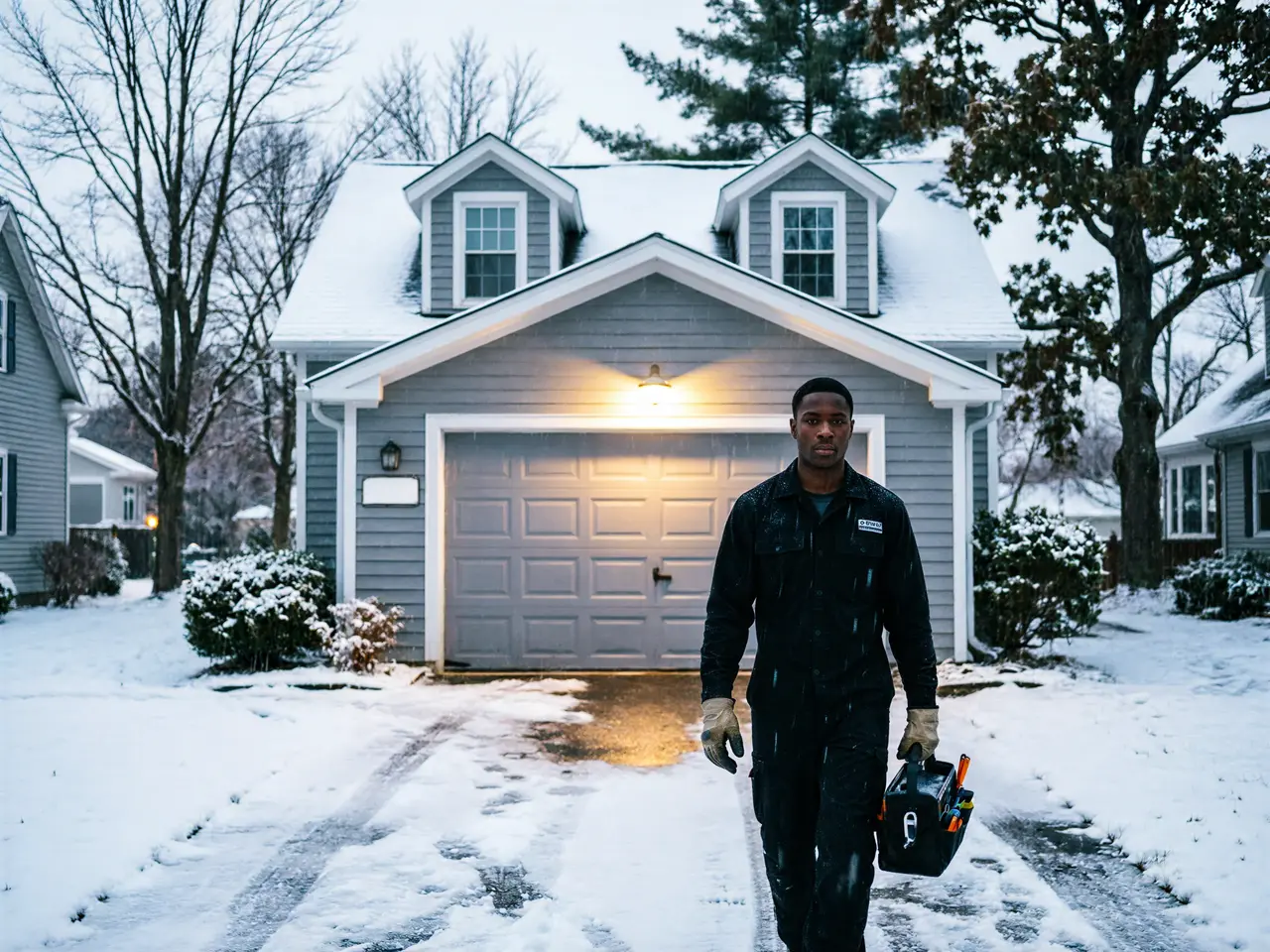
An emergency call usually means one of three things: a torsion spring has let go, a cable has jumped the drum, or the opener has stopped responding and the door is stuck halfway. The first job on site is always the same - kill power, check the springs, and find out if the door is safe to move by hand before anyone touches the opener. On houses in this area built mostly between 1955 and 1984, that often means dealing with torsion hardware that was sized for a lighter door than the one hanging on it now, since a lot of original doors got swapped for heavier insulated steel at some point without anyone upgrading the springs to match. That mismatch is one of the more common reasons a spring snaps years earlier than it should. A straightforward spring swap on a double door, with the right parts on hand, is usually a same-visit job. What isn't same-visit: a bent track that's pulled away from the framing, or a panel that's cracked enough that patching it would just be a short-term fix on a door you're going to replace within the year anyway. We'll tell you straight when that's the case instead of billing you twice.
What Is on the Truck
Given how much of the housing stock in this part of Connecticut dates to the 1960s and 70s, the truck carries torsion springs in the sizes that match those original door weights and the heavier springs that match the insulated replacements homeowners added later. Standard-lift cable, nylon and steel rollers, and the common residential opener drive parts are stocked too, since those fail at a predictable rate once a system has cycled for decades. What we don't carry is every size of custom panel - some of the older doors in this area were sized to openings that modern stock doors don't match exactly, so a cracked panel on one of those sometimes means a short order wait rather than a same-day fix. We'll tell you up front if your door falls into that category instead of promising a part we don't have. For the torsion and cable failures that make up most emergency calls, the parts to fix it right are already on the truck when it leaves in the morning.
Why It Happens Here
This area sits in a climate band classed as cold and severe, and that matters more to a garage door than most people think. Steel contracts in deep cold, lubricant thickens, and a torsion spring that's already near the end of its cycle life is far more likely to snap on a hard-freeze night than on a mild one. Combine that with a housing stock where most garages were built between 1955 and 1984 - median build year 1968 - and you get a lot of doors running original or near-original torsion hardware that's simply aged out. Across the 21 named areas that make up this mostly 1960s-and-70s housing stock, the pattern repeats: galvanized springs rated for a certain number of cycles, installed decades ago, now failing in the same cold snaps every winter. It isn't bad luck and it isn't one unlucky house - it's hardware reaching the end of a predictable lifespan at the exact moment the cold puts the most load on it.
How It Shows Up
Most emergency calls start the same way: a loud bang from the garage, usually overnight or first thing on a cold morning, and then a door that won't budge or an opener that strains and stops. Sometimes it's quieter - a door that's suddenly heavier to lift by hand, or one that's started drifting crooked on one side as a cable frays. On older torsion setups common in homes here, a snapped spring often looks dramatic but is contained; a snapped cable on an unbalanced door is more dangerous because the door can come down unevenly. If the opener runs but the door doesn't move, that's usually the drive mechanism, not the springs. If you hear grinding from the track as the door moves, that's a roller or alignment problem that will get worse, not better, if it's ignored through another cold snap.
Frequently asked questions
Why did my garage door spring snap in the middle of the night during a cold snap?
Cold makes steel contract and stiffens lubricant, which adds load right when a torsion spring is already near the end of its rated cycle life. Homes in this area often still run original or early-replacement torsion hardware sized decades ago, so a hard freeze is a common trigger for a failure that was already coming.
Can you fix a broken spring the same day you come out?
For most torsion and cable failures, yes - the truck carries the common spring sizes that match both original and later heavier replacement doors found across this housing stock. A cracked panel on an older, nonstandard door size is the exception; that sometimes needs an ordered part.
Is it worth repairing an old garage door or should I just replace it?
Depends on what's broken. A spring, cable, or opener repair on an otherwise sound door is usually worth it. If the door itself is cracked, warped, or the track is bent from age, we'll tell you when the repair cost gets close to replacement cost instead of patching something short-term.
Do you serve towns near Norwalk, not just Norwalk itself?
Yes, this emergency repair service covers Norwalk and the surrounding area, including towns like Darien, Westport, and New Canaan a few miles out. Each nearby town has its own page with details specific to that area.
Related services
By Neighborhood
Emergency Garage Door across the Norwalk area
We also handle emergency garage door in these Norwalk-area suburbs.
Book garage door service in Norwalk
Call now or request a quote - tell us what the door is doing and where you are.