Norwalk, CT · Garage Door Service
Garage Door Maintenance for Trumbull's 1960s Doors
Maintenance for Trumbull's 1960s sectional doors, serviced from Norwalk, 16 miles out. Built-era hardware, cold-climate wear, and what a tune-up visit covers.
- Repairs & new doors
- Springs & openers
- Serving 8 nearby communities
What Can Go Wrong
Most garage doors in Trumbull went up around 1965, which puts them squarely in the sectional steel era - single-layer panels, no foam core, hung on extension springs mounted along the horizontal track rather than a torsion bar over the header. That hardware is simple, but it wears in predictable spots. Extension springs stretch and lose tension gradually, so a door that used to lift with one hand starts needing two. Galvanized lift cables fray where they wrap the drum, usually invisible until a strand pops. Steel hinges at the panel seams rust from the inside out on doors that never got a coat of anything after installation. Rollers - especially the original steel ones, if they haven't been swapped for nylon - flatten and start grinding in the track. None of this is dramatic until the day it is: a frayed cable lets go, or a spring snaps under load, and a 150-pound door comes down fast. The honest version of 'what can go wrong' is that on a door this age, the failure usually isn't sudden - it's been telegraphing itself for months through a slow close, a scrape, or a louder motor. Maintenance is mostly about catching that before it becomes an emergency call.
What Is on the Truck
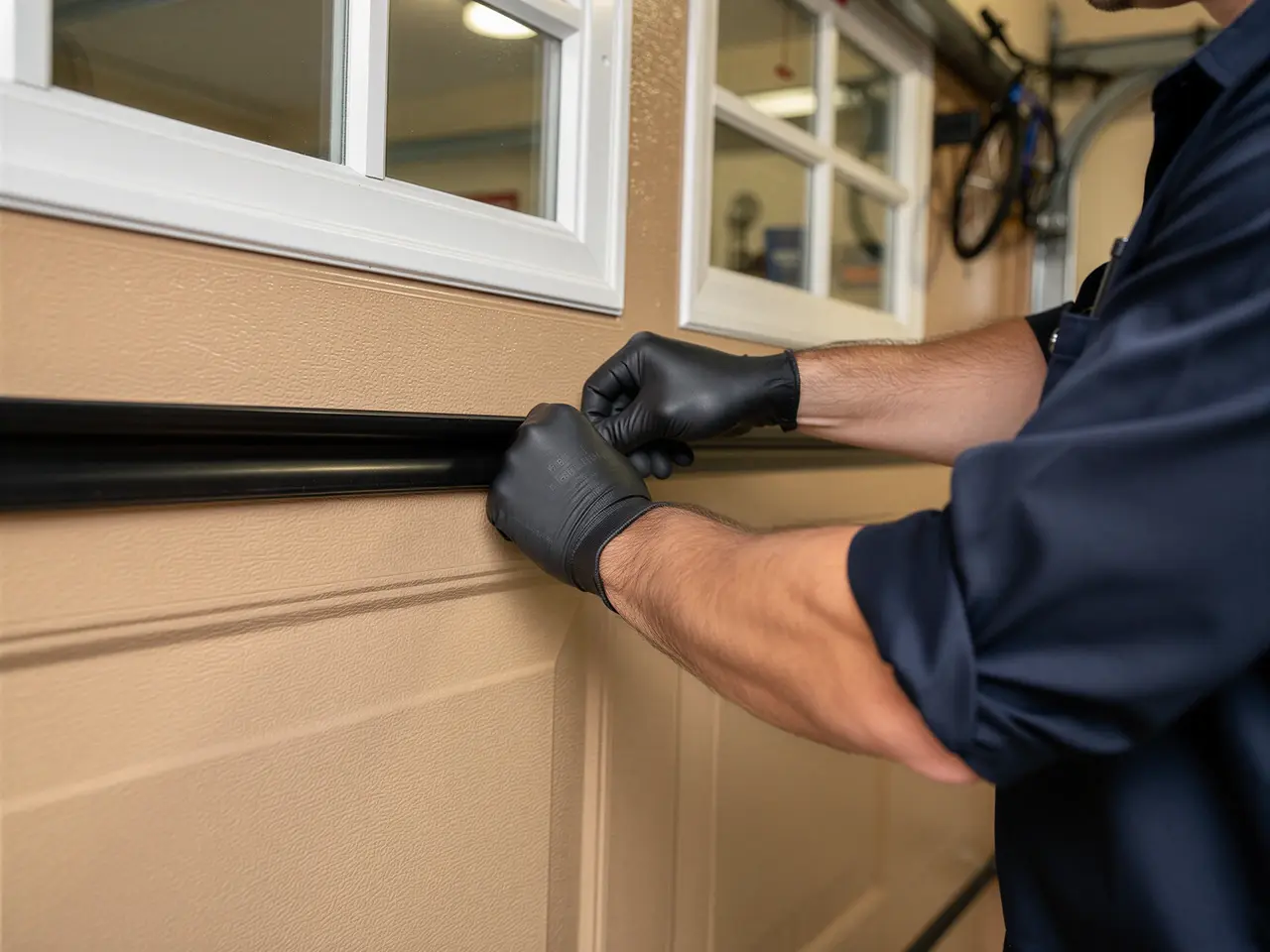
For a door built in the mid-1960s, the truck carries what that hardware actually needs: extension and torsion springs sized for both single 9x7 doors and double 16x7 doors, galvanized aircraft cable, nylon rollers to replace worn steel ones, and hinges sized for the panel gauge common on doors from that period. Cold-rated lubricant goes on every visit - the grease that shipped with a 1960s track doesn't hold up through a Connecticut winter, and the wrong lubricant just attracts grit. Weatherstrip and bottom astragal get stocked in standard widths, since most of these doors use a track that hasn't changed dimension in decades. What doesn't get carried: replacement opener logic boards or anything proprietary to a specific newer brand - if a door has had a modern opener retrofitted, that part sometimes has to be ordered rather than pulled off the truck.
How Long It Takes
A straightforward maintenance visit - lubrication, hardware check, track alignment, spring tension, cable inspection - usually runs under an hour once the tech is on site. Add a spring replacement or a full roller swap and it runs longer, since the door has to come apart safely before it goes back together. Because the truck comes from Norwalk, sixteen miles away, a Trumbull visit works better booked for a set window than requested as a same-hour fit-in. That's not a reflection on the job itself, it's just the drive. If a part isn't on the truck - a less common spring size, for instance - the visit for diagnosis and the visit for the fix may end up as two trips rather than one, and it's fair to ask up front whether that's likely for your door.
Why It Happens Here
Trumbull's housing stock centers on 1965, a few years older than the broader service area's median of 1968, which means the doors coming due for hardware replacement right now are more often original extension-spring units than later torsion conversions. That matters because extension springs fatigue differently - they stretch and sag rather than just losing coil tension, and they're the type most likely to let go without warning if a cable frays alongside them. Trumbull sits in the severe end of the cold climate band, and on a house built in 1965 that means door-track grease hardens enough most winters to turn a slow spring into a sudden one, right around the first real cold snap. With roughly 11,886 households in town, most sitting on houses from that same build decade, the spring-fatigue curve tends to hit a lot of doors within a year or two of each other rather than being spread evenly over time. Median household income here runs $163,227, a bit under the Norwalk-area service median of $168,810 - that doesn't change the physics of a worn spring, but it does shape which repairs get scheduled right away and which get put off a season.
Can You Do This Yourself
Some of this is fine to do on your own. Wiping down the track and applying a light coat of garage-door-specific lubricant to hinges and rollers twice a year is reasonable homeowner work, and so is a visual check for frayed cable strands or a hinge that's visibly bent. What isn't a DIY job: adjusting spring tension. Extension springs under load store enough energy to cause a real injury if the winding bar or the attachment slips, and on a door this age the brackets themselves may be the original 1960s hardware, not rated for modern assumptions about load. If the door is noticeably harder to lift than it used to be, that's a tension problem, not a lubrication problem, and it's worth a call rather than a wrench.
Booking a Visit
The truck travels from Norwalk to Trumbull, about sixteen miles, so visits are scheduled with a window rather than offered as a drop-in. See the Trumbull coverage page for what's covered in this part of the service area, or check the Norwalk maintenance page if you're closer to town and want the home-base version of this service.
Frequently asked questions
How old does a garage door have to be before maintenance stops being worth it?
It depends on the hardware, not just the calendar. A 1960s door with original extension springs and steel rollers can still be maintained for years if the panels and track are sound - it's usually the springs and cable that need periodic replacement, not the whole door.
Why does a Trumbull visit need a scheduled window instead of a same-day call?
The truck is based in Norwalk, about sixteen miles out. That drive means visits here work better booked ahead than requested as an immediate add-on to a Norwalk-area route.
Do winters here really affect garage door springs that much?
Trumbull falls in the severe end of the cold climate band, and cold-hardened grease plus a spring that's already losing tension is a common combination. Maintenance before the first real cold snap catches a lot of this before it becomes a sudden failure.
Is it safe to lubricate my own door between visits?
Yes - wiping the track and applying a garage-door-rated lubricant to hinges and rollers is reasonable homeowner maintenance. Adjusting spring tension is not; that's where the energy stored in the spring makes it a job for someone who does it regularly.
Book garage door service in Norwalk
Call now or request a quote - tell us what the door is doing and where you are.