
Norwalk, CT · Garage Door Service
Off-Track Garage Door Repair for Monroe Homes
Monroe's garage doors mostly date to 1978, a decade newer than the area median, with original track hardware now failing. Norwalk Garage Door Pros repairs off-track doors here.
- Repairs & new doors
- Springs & openers
- Serving 8 nearby communities
How It Shows Up
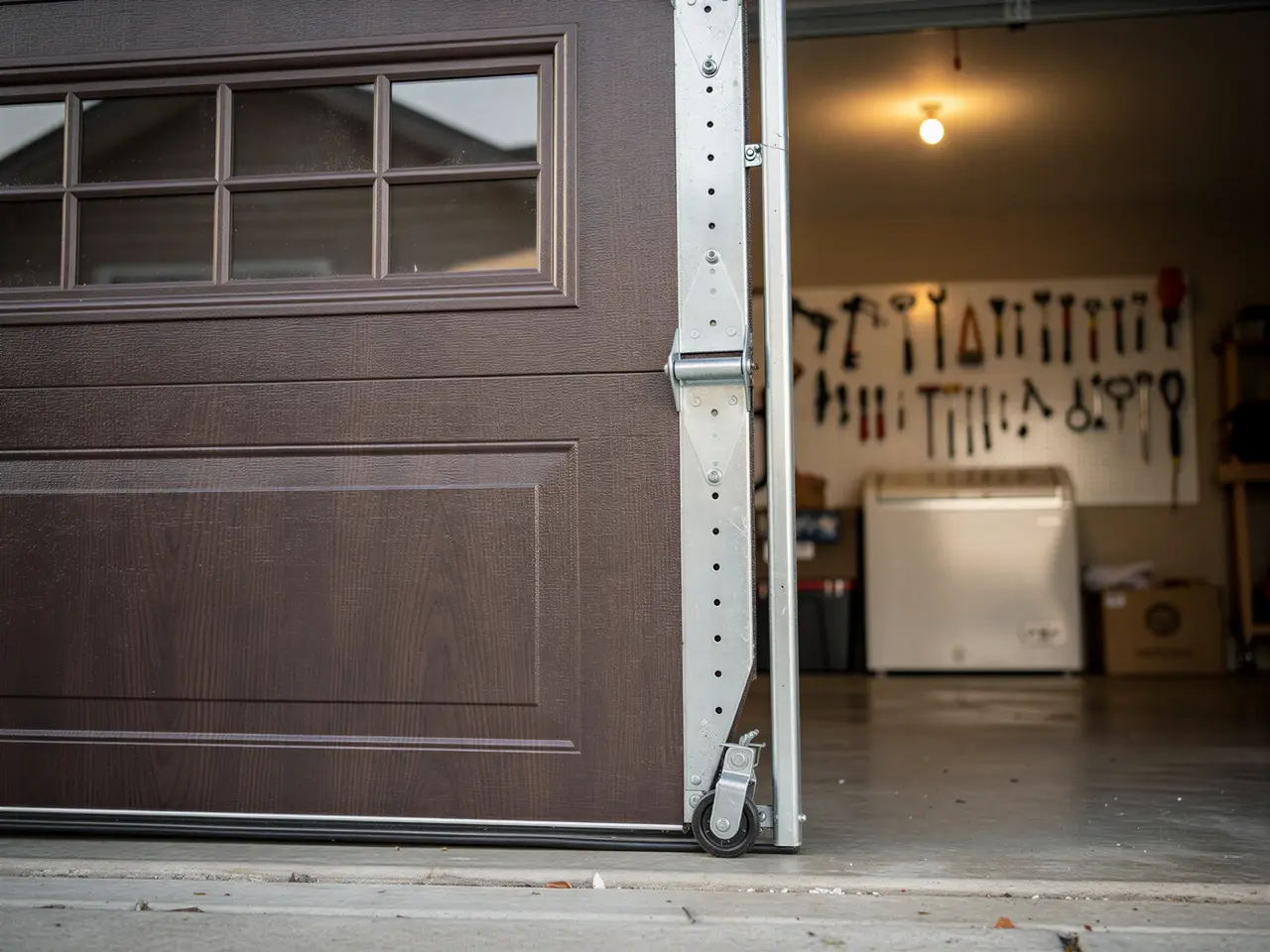
In a Monroe house built around the neighborhood's median year of 1978, the first sign of an off-track door usually isn't a dramatic bang. It's a door that catches a few inches up, hesitates, then jerks forward like it's fighting something. Look at the bottom rollers where they meet the track - if you see a roller sitting half in, half out of the channel, or a cable that's gone slack and started to loop, that's a door already off its rail. Sometimes it shows as a gap between the bottom panel and the track on one side only, which means the door has racked sideways instead of popping straight out. A lot of homeowners keep hitting the opener button when this happens, which is the one thing you shouldn't do - it forces the track bracket further out of the wall and turns a twenty-minute realignment into a track replacement. If the opener strains and reverses, or the door stops a foot off the floor and won't go further, shut it down and call before you run it again.
Why It Happens Here
Monroe's housing stock runs newer than the broader service area - median build year 1978 against the area's overall 1968 - but newer doesn't mean the hardware has been touched since. A door hung in 1978 came with steel rollers, light-gauge track, and lag screws set into jamb wood that's now had 46 years to dry out and shrink. This region sits in a severe cold climate band, and that matters more for track failure than most people think: repeated freeze and thaw cycles work those lag screws loose a little more each winter, and a track bracket that's lost even an eighth of an inch of grip lets the whole rail flex when the door runs. Add a driveway that pitches toward the garage, or a slab that's settled unevenly over four and a half decades, and the track ends up slightly out of plumb on one side. None of that shows up until the rollers start riding the edge of the channel instead of the center, and eventually one jumps clear.
What Can Go Wrong
The most common failure on a 1978-era door is a bottom roller working loose from a worn stem, letting that corner of the door drop and bind against the track. Left alone, the opener keeps pulling against the bind until either the drum cable frays at the point of friction or the track bracket pulls away from the framing entirely. On double doors, which carry more weight across a single torsion spring, an off-track roller on one side puts the whole bar under uneven load, and the opener can force the door into a diagonal rack that bends the track permanently rather than just knocking it loose. A bent track almost never straightens back to true - once the steel kinks, the fix is a new section of track, not a realignment. The other failure we see is the cable itself jumping the drum groove when a roller binds, which can let the door drop fast. That's not a DIY tightening job; a loaded cable under tension is the one part of this repair that's not worth guessing at.
The Cost of This Job
A straight realignment - rollers back in the channel, brackets retightened, track checked for plumb - is a quick fix in most Monroe homes, since the door itself usually isn't damaged, just knocked loose. It gets more involved if the track is visibly bent or the bracket has pulled out of the jamb, because at that point you're replacing hardware, not just adjusting it. We don't carry every roller and track size on the truck for every build year, so if your door takes an older or less common part, there can be a short wait on that piece specifically. Monroe sits about 20 miles out from our Norwalk base, on the far end of where we run calls, so we're honest about that distance rather than promising a same-hour fix we can't back up. One limitation worth saying plainly: if the track has bent more than once in the same spot, replacing just that section is often a short-term fix - the whole rail is usually the better call, even though it costs more up front.
Frequently asked questions
Can I push my garage door back on track myself?
Not safely. The door and track are under spring tension, and pushing a panel back into a bent or loose track can snap a cable or drop the door on your hand. Shut the opener off, don't force the door, and call it in - this is a tension job, not a push-and-shove job.
Why does this keep happening on the same side of my door?
That usually means the bracket on that side has worked loose from the jamb, often from decades of freeze-thaw movement in older lag screws. Realigning the roller without fixing the bracket just means it jumps track again within weeks.
Is a bent track worth fixing or should I replace the whole door?
Depends on how many times and where. One clean bend in a short section can sometimes be swapped out. Repeated bends, or damage near the opener arm, usually mean the whole track - and sometimes the door panel it damaged - needs replacing rather than patching.
Book garage door service in Norwalk
Call now or request a quote - tell us what the door is doing and where you are.